
What is TEVAR?
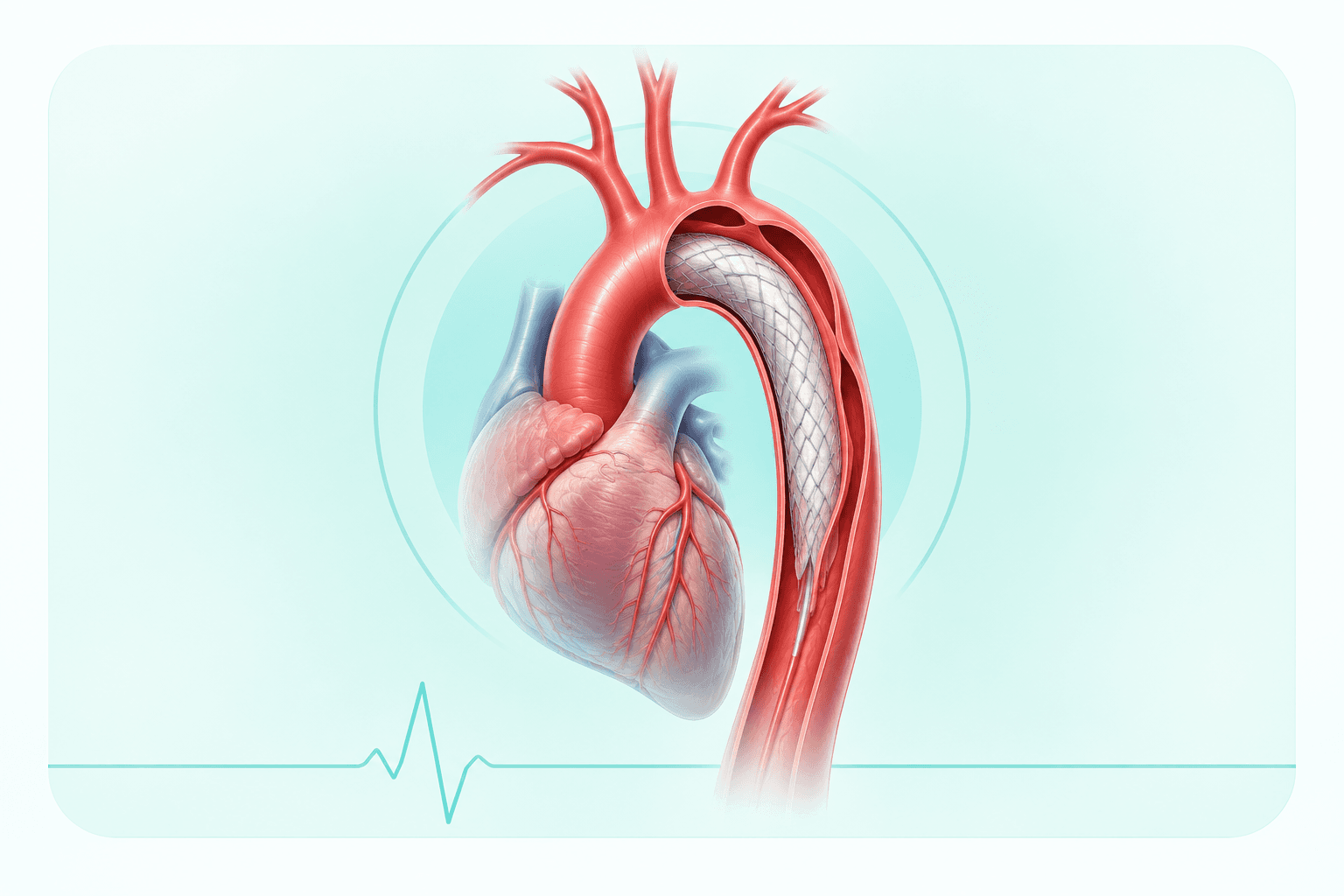
Thoracic Endovascular Aortic Repair, commonly called TEVAR, is a minimally invasive procedure used to treat certain diseases affecting the thoracic aorta, particularly the descending part of the aorta.
The aorta is the body's largest artery. It carries oxygen-rich blood from the heart to the rest of the body. When part of the aortic wall becomes weakened or damaged, conditions such as a thoracic aortic aneurysm or aortic dissection can develop.
In appropriately selected patients, TEVAR allows a surgeon to repair the damaged section of the aorta from inside the blood vessel rather than performing traditional open chest surgery.
During the procedure, a specially designed stent graft is delivered through a blood vessel, usually through the groin, and positioned inside the affected portion of the aorta. The graft creates a new pathway for blood flow and helps exclude the damaged section of the aortic wall from high blood pressure.
This makes TEVAR an important treatment option in modern aortic aneurysm and aortic dissection management.
What Does TEVAR Stand For?
TEVAR stands for:
Thoracic Endovascular Aortic Repair
- Thoracic – relating to the chest
- Endovascular – performed from inside a blood vessel
- Aortic – involving the aorta
- Repair – treating the damaged portion of the artery
Unlike traditional open aortic surgery, TEVAR is performed using catheters and a stent graft introduced through the blood vessels.
What Conditions Can TEVAR Treat?
TEVAR is not suitable for every type of aortic disease. The decision depends on the location of the problem, the anatomy of the aorta and the patient's overall health.
1. Thoracic Aortic Aneurysm
A thoracic aortic aneurysm occurs when part of the aorta in the chest becomes abnormally enlarged.
As an aneurysm increases in size, the risk of complications such as rupture or dissection can increase.
For selected aneurysms involving the descending thoracic aorta, TEVAR can be used to place a stent graft across the aneurysm and redirect blood flow through the graft.
2. Aortic Dissection
An aortic dissection occurs when a tear develops in the inner layer of the aortic wall, allowing blood to enter between the layers of the artery wall.
Depending on the location and characteristics of the dissection, TEVAR may be considered to cover the entry tear and improve blood flow through the true lumen.
3. Traumatic Aortic Injury
Severe chest trauma, including injuries caused by road traffic accidents, can damage the thoracic aorta.
In selected patients with traumatic aortic injury, endovascular repair can provide an alternative to conventional open surgery.
4. Complex Aortic Disease
Some patients have disease involving multiple sections of the aorta or major blood vessels branching from it.
These cases may require a hybrid procedure, branched stent graft, fenestrated graft or open surgical approach, depending on the anatomy.
When Is TEVAR Recommended?
Having an aortic aneurysm does not automatically mean that TEVAR is required.
Treatment decisions are individualized.
Your cardiovascular team may consider:
- Size of the aneurysm
- Rate of aneurysm growth
- Location of the aneurysm
- Symptoms
- Risk of rupture
- Presence of aortic dissection
- Aortic anatomy
- Size and condition of the femoral and iliac arteries
- Other medical conditions
- Previous aortic procedures
- Overall surgical risk
Some patients can be monitored with regular imaging and medical treatment, while others may require an intervention.
The most appropriate procedure may be TEVAR, open aortic surgery or another endovascular or hybrid technique.
How Is TEVAR Planned?
Careful imaging is one of the most important parts of TEVAR.
CT Angiography
A CT angiogram of the aorta provides detailed information about:
- Aortic diameter
- Aneurysm location
- Aortic dissection
- Branch vessels
- Landing zones
- Femoral arteries
- Iliac arteries
- Overall aortic anatomy
This information helps the surgical team determine whether TEVAR is technically possible and which stent graft is appropriate.
Why Is Aortic Anatomy Important?
A stent graft needs adequate areas above and below the diseased section to seal properly.
These areas are known as landing zones.
If the aneurysm or dissection extends close to important branches of the aorta, more complex strategies may be required.
What Is a TEVAR Stent Graft?
A TEVAR stent graft is a tube-like device made from a fabric material supported by a metal framework.
It is compressed inside a delivery system and introduced through the blood vessel.
Once it reaches the intended location, the graft is deployed and expands against the aortic wall.
The stent graft then:
Creates a new channel for blood flow → excludes the damaged section → reduces blood flow pressure against the diseased aortic wall.
For an aneurysm, this can help prevent continued expansion and reduce the risk of rupture.
How Is TEVAR Performed?
Although the exact technique varies from patient to patient, the procedure generally involves several steps.
Step 1: Anaesthesia
The patient receives appropriate anaesthesia and monitoring.
Step 2: Accessing the Blood Vessel
The surgeon accesses an artery, commonly through the groin.
Step 3: Guiding the Catheter
A guidewire and catheter are carefully advanced through the blood vessel toward the diseased portion of the aorta.
Step 4: Positioning the Stent Graft
The stent graft is positioned across the aneurysm or the affected section of the aorta.
Step 5: Deploying the Graft
The graft expands and attaches against the aortic wall.
Step 6: Checking Blood Flow
Imaging is used to confirm the position of the graft and assess blood flow.
The aim is to ensure that blood flows through the stent graft rather than continuing to press against the weakened portion of the aorta.
Is TEVAR Open-Heart Surgery?
No.
TEVAR is an endovascular procedure, not traditional open-heart surgery.
Instead of opening the chest to directly access the aorta, the surgeon uses a catheter-based approach to reach the diseased section from inside the blood vessels.
However, TEVAR is still a major cardiovascular procedure and requires careful planning, specialized equipment and an experienced multidisciplinary team.
TEVAR vs Open Aortic Surgery
One of the most common questions patients ask is:
"Is TEVAR better than open surgery?"
There is no single answer for every patient.
| TEVAR | Open Aortic Surgery |
|---|---|
| Minimally invasive access | Large surgical incision |
| Usually avoids opening the chest | Requires open surgical access |
| Generally less blood loss | Usually greater blood loss |
| Often shorter recovery | Usually longer recovery |
| Suitable for selected anatomy | Can treat anatomy unsuitable for TEVAR |
| Requires lifelong imaging surveillance | Also requires long-term follow-up |
TEVAR can provide important advantages in appropriately selected patients, but the anatomy and type of aortic disease determine the best treatment.
What Is the Difference Between TEVAR and EVAR?
The terms can sometimes be confusing.
TEVAR
Thoracic Endovascular Aortic Repair
Primarily refers to endovascular treatment of disease involving the thoracic aorta.
EVAR
Endovascular Aneurysm Repair
Usually refers to endovascular treatment of an abdominal aortic aneurysm.
In simple terms:
TEVAR → Thoracic aorta
EVAR → Abdominal aorta
What Are Fenestrated and Branched Stent Grafts?
Some aneurysms involve areas close to important arteries branching from the aorta.
A standard stent graft may not be suitable in these situations.
Specialized devices may include:
Fenestrated Stent Graft
Contains openings, or fenestrations, that allow blood to continue flowing into important branch arteries.
Branched Stent Graft
Uses branches within the graft to maintain blood flow to selected arteries.
Hybrid Aortic Repair
Combines endovascular treatment with an open surgical component.
These approaches are generally reserved for more complex aortic anatomy and require detailed preoperative planning.
How Long Does TEVAR Take?
The duration varies depending on the complexity of the procedure.
A straightforward TEVAR may take a few hours, while complex cases involving multiple grafts, branch vessels or additional procedures can take longer.
The procedure time should therefore be discussed individually with your treating team rather than assuming a fixed duration.
What Happens After TEVAR?
After the procedure, patients are monitored closely.
Depending on the complexity of the repair, monitoring may include:
- Blood pressure
- Heart rate
- Neurological function
- Kidney function
- Access-site bleeding
- Blood flow to the legs
- Signs of infection
Some patients spend time in an intensive care unit before moving to a regular hospital room.
The length of hospitalization depends on the patient's condition and the complexity of the procedure.
TEVAR Recovery Time
One of the major advantages of TEVAR compared with many forms of open aortic surgery is that recovery can be faster in appropriately selected patients.
Recovery may involve:
First few days
Close monitoring and gradual mobilization.
First 1–2 weeks
Gradual return to normal daily activities according to medical advice.
Following weeks
Progressive increase in activity while avoiding activities that have not yet been cleared by the treating team.
Recovery varies significantly between individuals, particularly when TEVAR has been performed urgently for an acute aortic condition.
What Are the Risks of TEVAR?
Like every major medical procedure, TEVAR has potential risks.
These can include:
- Endoleak
- Graft movement or migration
- Infection
- Bleeding
- Blood-vessel injury
- Kidney injury
- Stroke
- Spinal cord ischemia
- Leg weakness or paralysis
- Heart complications
- Need for another procedure
The risk depends on several factors, including the patient's age, health, urgency of treatment, anatomy and extent of aortic disease.
Can TEVAR Cause Paralysis?
This is an important concern for patients.
The spinal cord receives blood from several arteries, including vessels that can be affected during extensive aortic repair.
In some TEVAR procedures, particularly when a long segment of the thoracic aorta must be covered, there can be a risk of spinal cord ischemia, which may result in weakness or paralysis.
Your surgical team may use individualized strategies to reduce this risk, depending on your anatomy and the extent of aortic coverage.
What Is an Endoleak After TEVAR?
An endoleak occurs when blood continues to flow outside the stent graft but within the excluded aneurysm area.
Not every endoleak requires immediate treatment.
Some can be monitored, while others may require another endovascular procedure.
This is one of the reasons long-term imaging surveillance is essential after TEVAR.
Follow-Up After TEVAR
TEVAR does not mean that follow-up ends after the procedure.
Regular imaging is essential to evaluate:
- Stent graft position
- Endoleak
- Aneurysm size
- Aortic remodeling
- New aortic disease
- Graft integrity
Your doctor will determine the appropriate imaging schedule based on your condition and procedure.
What Is Life Like After TEVAR?
Many patients can gradually return to their usual activities after recovery.
Long-term care may include:
- Blood-pressure control
- Cholesterol management
- Avoiding tobacco
- Heart-healthy nutrition
- Appropriate physical activity
- Regular medical reviews
- Scheduled CT or other imaging
Controlling cardiovascular risk factors is particularly important because TEVAR treats the affected section of the aorta but does not necessarily eliminate the underlying tendency toward aortic disease.
TEVAR for Aortic Dissection
TEVAR has an important role in selected cases of descending aortic dissection.
The objective may be to cover the primary entry tear, improve blood flow through the true lumen and encourage favorable remodeling of the affected aorta.
However, not every aortic dissection should be treated with TEVAR.
The type of dissection, location, symptoms, complications and individual anatomy all influence treatment decisions.
TEVAR for Thoracic Aortic Aneurysm
For selected descending thoracic aortic aneurysms, TEVAR can exclude the aneurysm from blood circulation.
Whether treatment is necessary depends on factors such as:
- Aneurysm size
- Growth rate
- Symptoms
- Location
- Shape
- Patient-specific risk factors
- Anatomical suitability for endovascular repair
Regular imaging can be important for patients whose aneurysm is being monitored rather than immediately treated.
Who Is a Candidate for TEVAR?
A person may be considered for TEVAR when:
- The aortic disease is located in an anatomically suitable region.
- The blood vessels can accommodate the delivery system.
- There are suitable landing zones.
- The stent graft can be positioned safely.
- The expected benefits outweigh the risks.
A detailed CT angiogram is usually central to this assessment.
Why Choose an Experienced Aortic Team?
Aortic disease can be complex.
Successful treatment isn't simply about inserting a stent graft. It requires:
Accurate diagnosis → detailed imaging → anatomical planning → appropriate procedure selection → careful execution → neurological and cardiovascular monitoring → lifelong surveillance.
For complex aortic conditions, treatment may involve cardiac surgeons, vascular specialists, interventional teams, radiologists, anaesthesiologists and critical-care specialists.
Frequently Asked Questions About TEVAR
- Is TEVAR a major surgery?
- TEVAR is minimally invasive compared with open aortic surgery, but it remains a major cardiovascular procedure requiring careful planning and monitoring.
- Is TEVAR painful?
- Patients generally experience less surgical pain than with open chest surgery, although discomfort can occur around the access site.
- How long do I stay in the hospital after TEVAR?
- The hospital stay varies according to the patient's condition, the complexity of the repair and whether the procedure was planned or performed urgently.
- Is TEVAR permanent?
- The stent graft is intended to remain in place, but lifelong imaging surveillance is important.
- Can an aneurysm return after TEVAR?
- The treated aneurysm may require continued monitoring, and other sections of the aorta can develop disease. Regular follow-up is therefore important.
- What is an endoleak?
- An endoleak occurs when blood continues to enter the aneurysm area outside the stent graft.
- Can TEVAR treat aortic dissection?
- Yes, TEVAR can be used in selected patients with certain types of descending aortic dissection.
- Is TEVAR safer than open surgery?
- TEVAR can have important advantages in appropriately selected patients, but the risks and benefits depend on individual anatomy and disease.
- Can TEVAR treat an ascending aortic aneurysm?
- Standard TEVAR is generally designed for descending thoracic aortic disease. Ascending aortic disease often requires a different surgical approach.
- How often will I need scans after TEVAR?
- Long-term imaging surveillance is generally required, with the exact schedule determined by your treating team.
Conclusion
Thoracic Endovascular Aortic Repair (TEVAR) has transformed the treatment of many patients with thoracic aortic disease.
By delivering a stent graft through the blood vessels, TEVAR can treat selected thoracic aortic aneurysms, aortic dissections and traumatic aortic injuries without the large chest incision required for conventional open surgery.
However, TEVAR is not automatically the right treatment for every patient. The location and anatomy of the aortic disease, the patient's overall health and the complexity of the condition all influence the treatment decision.
If you have been diagnosed with a thoracic aortic aneurysm or aortic dissection, a detailed evaluation with appropriate imaging can help determine whether TEVAR, open surgery, hybrid repair or continued surveillance is most appropriate.