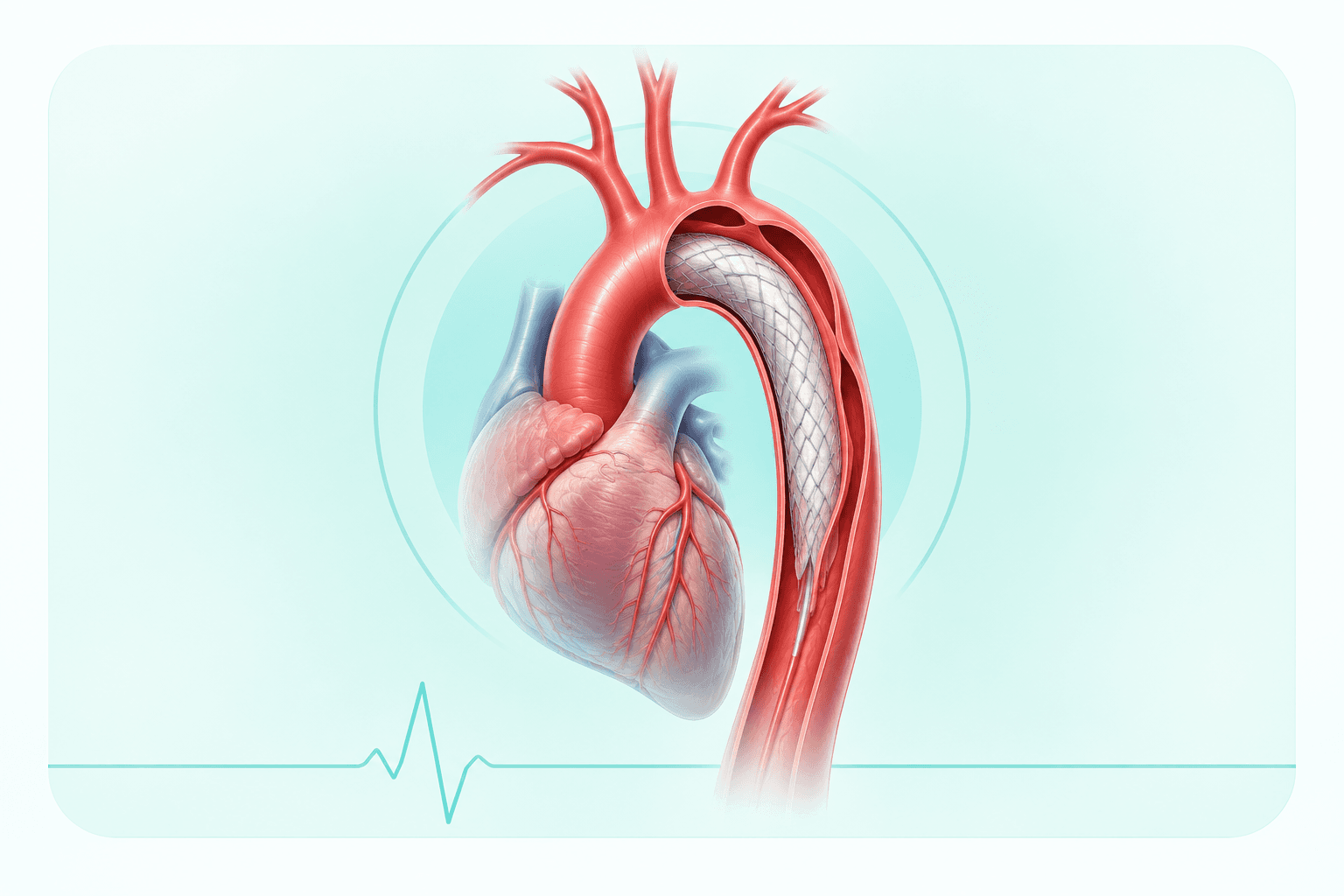
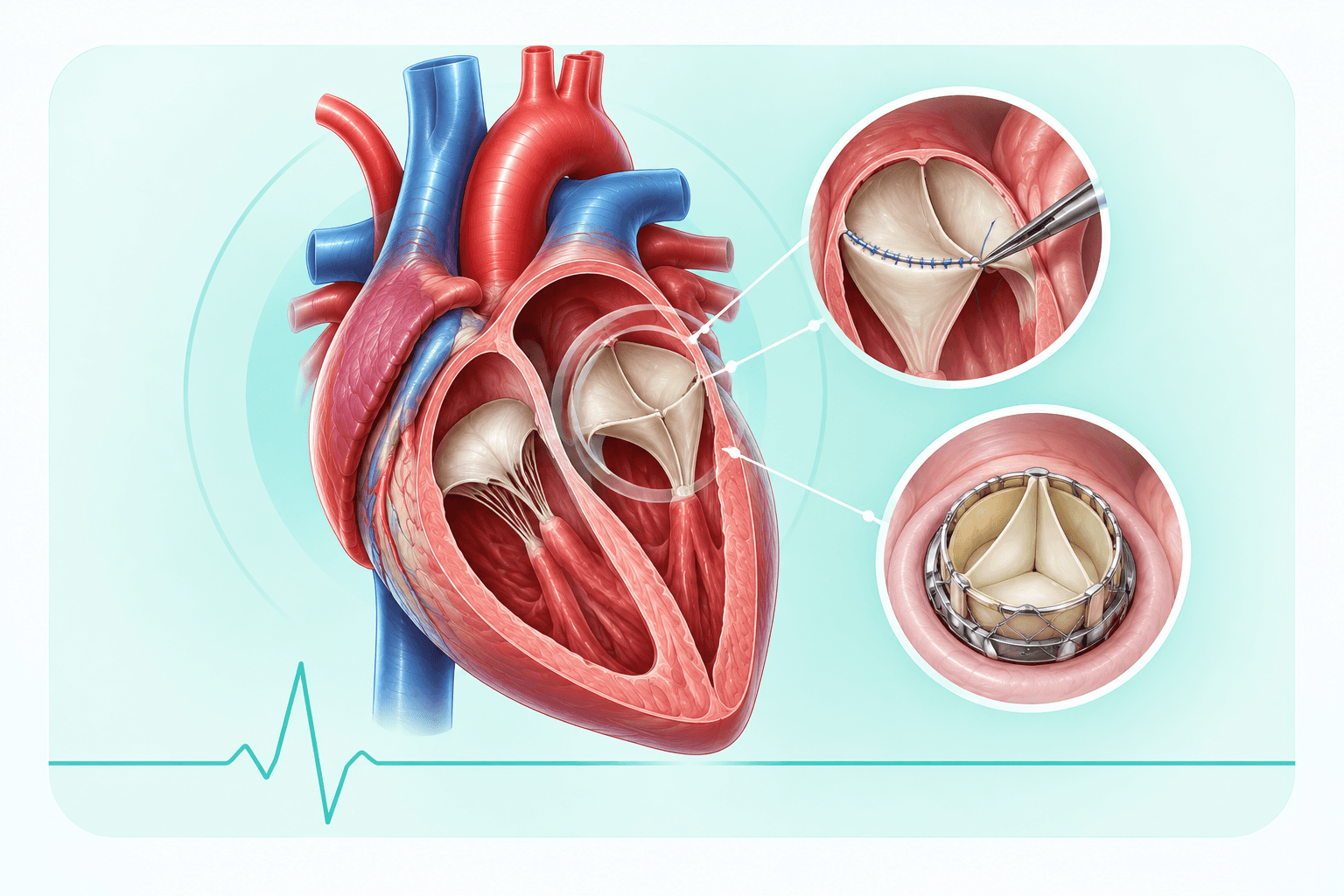

Aortic Root Replacement is a major heart and aortic surgery used to treat an enlarged or weakened aortic root, particularly when an aortic root aneurysm has a significant risk of rupture or aortic dissection. Depending on the condition of the aortic valve, surgeons may replace both the aortic root and valve or perform a valve-sparing aortic root replacement to preserve the patient's natural valve.
Understanding when aortic root replacement is recommended, how the procedure is performed, available surgical techniques, recovery, and potential risks can help patients and families make informed decisions about treatment.
Medical note: Treatment decisions for aortic disease are highly individual. The appropriate timing and type of surgery depend on a patient's aortic anatomy, aneurysm size and growth, valve function, underlying conditions and overall health.
What Is Aortic Root Replacement?
Aortic root replacement is a surgical procedure that replaces the diseased portion of the aorta located immediately above the heart, known as the aortic root.
The aortic root is important because it connects the heart's left ventricle to the ascending aorta and contains the origins of the coronary arteries. The aortic valve is also located within this region.
When the aortic root becomes enlarged because of an aortic root aneurysm, the weakened aortic wall may eventually tear or rupture. Aortic root replacement can remove the weakened section and replace it with a durable synthetic graft.
Depending on the condition of the patient's aortic valve, surgery may involve:
- Replacement of the aortic root and aortic valve
- Preservation of the patient's natural aortic valve
- Replacement of the aortic root and ascending aorta when necessary
- Reconstruction of the aortic root and reimplantation of the coronary arteries
What Is an Aortic Root Aneurysm?
An aortic root aneurysm occurs when the section of the aorta attached to the heart becomes abnormally enlarged or weakened.
The aorta is the body's largest artery. It carries oxygen-rich blood from the heart to the rest of the body.
The aorta consists of several sections:
- Aortic root
- Ascending aorta
- Aortic arch
- Descending thoracic aorta
- Abdominal aorta
An aneurysm affecting the aortic root or ascending aorta can progress over time. If the aortic wall becomes severely weakened, complications such as aortic dissection or rupture may occur.
Early diagnosis and appropriate monitoring are therefore important.
When Is Aortic Root Replacement Needed?
Not every aortic root aneurysm requires immediate surgery.
Some smaller aneurysms can be monitored regularly with imaging tests such as CT scans, MRI or echocardiography. Your doctor may also recommend controlling risk factors such as high blood pressure and smoking.
Aortic root replacement surgery may be considered when the risk associated with the aneurysm becomes greater than the risk of surgery.
The decision can depend on:
- Size of the aortic root
- Rate at which the aneurysm is growing
- Aortic valve function
- Family history of aortic dissection
- Bicuspid aortic valve
- Marfan syndrome
- Loeys-Dietz syndrome
- Other inherited aortic conditions
- Symptoms
- Overall health
- Age
- Previous aortic surgery
Importantly, there is no single aneurysm size that applies to every patient. Some people with inherited aortic conditions may require surgery at smaller dimensions because their risk of dissection can be higher.
What Causes an Aortic Root Aneurysm?
Several conditions can contribute to the development of an aortic root aneurysm.
Genetic and inherited conditions
Some inherited disorders can weaken the aortic wall, including:
- Marfan syndrome
- Loeys-Dietz syndrome
- Certain familial aortic diseases
- Other connective tissue disorders
Bicuspid aortic valve
A bicuspid aortic valve is a congenital condition in which the aortic valve has two leaflets instead of the usual three.
People with bicuspid aortic valve disease can also develop enlargement of the aortic root or ascending aorta.
High blood pressure
Long-term uncontrolled hypertension can increase stress on the aortic wall and contribute to progression of aortic disease.
Age-related changes
Changes in the structure and strength of the aortic wall can occur with aging.
Previous aortic disease or surgery
Certain patients may develop progressive enlargement of the aorta after previous heart or aortic procedures.
What Symptoms Can an Aortic Root Aneurysm Cause?
Aortic root aneurysms can develop without obvious symptoms.
When symptoms occur, they may include:
- Chest discomfort or pain
- Back pain
- Shortness of breath
- Difficulty swallowing
- Hoarseness
- A sensation of pressure in the chest
Symptoms can vary considerably depending on the size and location of the aneurysm and whether it is affecting nearby structures.
Sudden severe chest or back pain
Sudden, severe chest or upper-back pain can be a warning sign of an aortic dissection or rupture, which requires emergency medical attention.
How Is an Aortic Root Aneurysm Diagnosed?
Doctors use imaging tests to evaluate the size, shape and structure of the aorta.
Common investigations include:
Echocardiogram
An echocardiogram can evaluate:
- Aortic valve function
- Heart function
- Aortic root dimensions
- Enlargement of parts of the ascending aorta
CT angiography
A CT scan or CT angiography can provide detailed images of the aorta and help surgeons understand the anatomy before surgery.
Cardiac MRI
MRI can provide detailed information about the heart, aorta and surrounding structures without radiation.
Coronary angiography
Depending on the patient's age, symptoms and risk factors, coronary angiography may be performed to evaluate the coronary arteries before major aortic surgery.
Types of Aortic Root Replacement Surgery
There are several surgical approaches depending on the patient's anatomy and the condition of the aortic valve.
1. Bentall Procedure
The Bentall procedure replaces the diseased aortic root and aortic valve with a composite graft and prosthetic valve.
It may be recommended when:
- The aortic root is significantly diseased
- The aortic valve cannot be preserved
- There is significant aortic valve disease
- The anatomy is unsuitable for valve-sparing surgery
The replacement valve may be mechanical or biological, depending on individual circumstances.
2. Valve-Sparing Aortic Root Replacement
A valve-sparing aortic root replacement replaces the diseased aortic root while preserving the patient's own aortic valve.
This approach may be appropriate when the native aortic valve is structurally suitable for preservation.
Potential advantages can include:
- Preservation of the patient's natural valve
- Avoiding a prosthetic valve in appropriate patients
- Potentially avoiding lifelong anticoagulation that may be required with certain mechanical valves
However, valve-sparing surgery is technically demanding and is not suitable for every patient.
The decision depends on the condition of the valve, aortic anatomy, age, underlying disease and surgical assessment.
David Procedure
The David procedure is a type of valve-sparing aortic root replacement that uses a reimplantation technique.
During the procedure, the patient's aortic valve is preserved and reimplanted within a synthetic graft.
It can be considered in selected patients with aortic root aneurysms, including some younger patients and people with inherited aortic conditions.
Yacoub Procedure
The Yacoub procedure is another valve-sparing approach.
Unlike the David procedure's reimplantation technique, the Yacoub operation uses a remodeling approach to reconstruct the aortic root.
The appropriate technique depends on the patient's individual anatomy and the condition of the aortic valve.
Bentall Procedure vs Valve-Sparing Aortic Root Replacement
| Feature | Bentall Procedure | Valve-Sparing Root Replacement |
|---|---|---|
| Aortic root replaced | Yes | Yes |
| Natural aortic valve preserved | No | Yes, when suitable |
| Prosthetic valve | Required | Usually avoided |
| Mechanical valve option | Yes | No |
| Lifelong anticoagulation | May be required with mechanical valve | Usually not required for the native valve |
| Suitable for everyone | No | No |
| Surgical complexity | Major surgery | Technically complex |
The best operation is not determined by age alone. A detailed assessment of the aortic root, aortic valve and overall health is necessary.
How Is Aortic Root Replacement Performed?
Aortic root replacement is generally performed under general anesthesia.
The broad steps may include:
1. Anesthesia
The patient is placed under general anesthesia.
2. Access to the heart
For traditional open surgery, the surgeon accesses the heart through the chest, commonly using a median sternotomy.
3. Cardiopulmonary bypass
A heart-lung bypass machine temporarily performs the functions of the heart and lungs during the operation.
4. Removal of the diseased aorta
The surgeon removes the aneurysmal or damaged portion of the aortic root.
5. Graft placement
A synthetic vascular graft is used to reconstruct the aortic root.
6. Aortic valve management
Depending on the procedure:
- The diseased valve may be replaced, as in a Bentall procedure.
- The patient's natural valve may be preserved during valve-sparing surgery.
7. Coronary artery reimplantation
Because the coronary arteries originate near the aortic root, the coronary artery openings need to be carefully reattached to the new graft.
8. Completion and monitoring
The surgical team evaluates the reconstructed aortic root and valve before completing the operation.
How Long Does Aortic Root Replacement Surgery Take?
The duration of aortic root replacement surgery varies according to the complexity of the operation.
Factors affecting surgical time include:
- Type of root replacement
- Valve repair or replacement
- Extent of aortic disease
- Previous heart surgery
- Additional procedures required
- Individual anatomy
Complex aortic surgery can take several hours.
What Are the Risks of Aortic Root Replacement?
Aortic root replacement is a major heart surgery and, like any major operation, carries potential risks.
Possible complications include:
- Bleeding
- Infection
- Blood clots
- Stroke
- Heart attack
- Abnormal heart rhythms
- Kidney problems
- Lung complications
- Graft-related complications
- Aortic valve complications
- Need for additional surgery
The risk varies between patients and depends on factors such as age, overall health, urgency of surgery and whether the procedure is elective or performed as an emergency.
For this reason, patients should discuss their individual surgical risk with their aortic surgeon.
Aortic Root Replacement Recovery
Recovery following aortic root replacement surgery is gradual.
Patients typically spend time in an intensive care unit before moving to a regular hospital room.
Hospital recovery may involve:
- Pain management
- Monitoring of heart rhythm
- Breathing support when required
- Blood tests
- Imaging and cardiac monitoring
- Gradual mobilization
- Wound care
- Cardiac rehabilitation
The length of hospital stay varies depending on the complexity of surgery and the patient's recovery.
How Long Does It Take to Recover From Aortic Root Replacement?
Recovery from major open-heart and aortic surgery generally takes several weeks.
Many patients require approximately 6 to 12 weeks or longer for a more complete recovery, although the timeline varies considerably.
Your surgeon may provide specific instructions regarding:
- Driving
- Returning to work
- Physical activity
- Lifting weights
- Exercise
- Wound care
- Cardiac rehabilitation
Patients should follow their individual postoperative instructions rather than comparing their recovery with someone else's.
Life After Aortic Root Replacement
Successful surgery can provide long-term protection against complications associated with a severely enlarged or weakened aortic root.
However, aortic surgery does not mean that follow-up can stop.
Patients may require lifelong follow-up with their cardiac or aortic team.
Follow-up can include:
- Echocardiography
- CT scans
- MRI
- Blood pressure monitoring
- Assessment of the remaining aorta
- Monitoring of the aortic valve
This is particularly important for patients with genetic aortic conditions because other portions of the aorta may also require surveillance.
Aortic Root Replacement in Marfan Syndrome
Patients with Marfan syndrome can develop progressive enlargement of the aortic root.
Because the risk of aortic complications can occur at different dimensions in people with inherited aortic disease, treatment decisions need to be individualized.
In selected patients, valve-sparing aortic root replacement may allow preservation of a functioning native valve.
Patients with Marfan syndrome should be managed by an experienced team familiar with inherited aortic disease.
Aortic Root Surgery for Bicuspid Aortic Valve
A bicuspid aortic valve can be associated with enlargement of the ascending aorta and aortic root.
Patients may require assessment of:
- Aortic valve function
- Aortic root dimensions
- Ascending aorta
- Rate of aortic enlargement
- Family history
- Other cardiovascular risk factors
When surgery is indicated, the appropriate procedure depends on both the aortic anatomy and the condition of the valve.
Can Aortic Root Replacement Prevent Aortic Dissection?
One of the major goals of appropriately timed aortic root replacement is to reduce the risk of catastrophic complications such as aortic dissection or rupture.
However, the decision to operate must balance:
Risk of the untreated aneurysm
against
Risk of surgery.
This is why regular imaging and specialist evaluation are important for patients with known aortic root aneurysms.
When Is Aortic Root Surgery an Emergency?
Aortic root surgery may become an emergency when a patient develops complications such as:
- Acute aortic dissection
- Aortic rupture
- Rapidly worsening symptoms
- Severe aortic valve dysfunction associated with acute aortic disease
Sudden severe chest or upper-back pain, fainting, severe breathlessness or other concerning symptoms require immediate emergency medical evaluation.
Why Specialist Aortic Care Matters
Aortic root surgery is among the most complex forms of cardiovascular surgery.
Treatment planning may require collaboration between:
- Cardiac surgeons
- Cardiologists
- Imaging specialists
- Anesthesiologists
- Intensive-care specialists
- Genetic specialists when inherited aortic disease is suspected
The choice between Bentall procedure, valve-sparing aortic root replacement, David procedure or another approach should be based on detailed imaging and individual patient factors.
Aortic Root Replacement in Chennai
Patients searching for aortic root replacement in Chennai should consider evaluation by a specialist experienced in complex aortic and valve surgery.
The treatment plan should be based on:
- Detailed CT/MRI imaging
- Aortic root dimensions
- Aortic valve anatomy
- Heart function
- Patient age
- Family history
- Associated conditions
- Previous cardiac procedures
- Overall surgical risk
For patients requiring complex aortic surgery, the goal is not simply to replace the enlarged portion of the aorta, but to select the safest and most appropriate surgical strategy for the individual patient.
Dr. Idhrees provides evaluation and surgical management for complex aortic and valve conditions, including aortic root and aortic surgery. Patients should undergo a detailed consultation and imaging review to determine whether surgery is appropriate and which technique is best suited to their condition.
Frequently Asked Questions
- What is aortic root replacement?
- Aortic root replacement is surgery to replace a diseased or enlarged section of the aorta connected to the heart. Depending on the condition of the aortic valve, the valve may also be replaced or preserved.
- Is aortic root replacement open-heart surgery?
- Traditional aortic root replacement is major open cardiac surgery performed through the chest and usually requires cardiopulmonary bypass.
- What is the Bentall procedure?
- The Bentall procedure replaces the aortic root and aortic valve using a composite graft and prosthetic valve.
- What is valve-sparing aortic root replacement?
- Valve-sparing aortic root replacement replaces the diseased aortic root while preserving a suitable native aortic valve.
- What is the David procedure?
- The David procedure is a valve-sparing aortic root replacement technique in which the patient's aortic valve is preserved and reimplanted within a synthetic graft.
- What is the Yacoub procedure?
- The Yacoub procedure is a valve-sparing technique that reconstructs the aortic root using a remodeling approach.
- How long is recovery after aortic root replacement?
- Recovery varies by patient and procedure. Following major open surgery, many patients require several weeks, with more complete recovery commonly taking around 6 to 12 weeks or longer.
- Can an aortic root aneurysm be treated without surgery?
- Small or lower-risk aneurysms may sometimes be monitored with regular imaging and medical management. Surgery is considered when the risk of complications becomes significant.
- Can the natural aortic valve be preserved?
- Yes. In selected patients whose valve is suitable, a valve-sparing aortic root replacement may preserve the patient's natural valve.
- Is aortic root replacement risky?
- Aortic root replacement is major surgery and carries risks including bleeding, infection, stroke, kidney complications, heart rhythm problems and other complications. Individual risk varies and should be discussed with the treating surgical team.
Conclusion
Aortic root replacement is an important treatment for selected patients with aortic root aneurysms and other complex diseases affecting the aorta near the heart. Modern surgical options include the Bentall procedure and valve-sparing aortic root replacement, including techniques such as the David and Yacoub procedures.
The right procedure depends on the patient's aortic anatomy, aortic valve condition, aneurysm characteristics, underlying disease and overall health.
Early diagnosis, appropriate surveillance and timely referral to an experienced aortic surgery team can be critical in reducing the risk of serious complications such as aortic dissection and rupture.
If you or a family member has been diagnosed with an aortic root aneurysm, seek specialist evaluation to understand whether monitoring, medical management or surgery is appropriate.