Coronary artery bypass grafting (CABG), commonly known as heart bypass surgery, is one of the most effective treatments for severe coronary artery disease. When the coronary arteries become narrowed or blocked by plaque, the heart muscle may not receive enough oxygen-rich blood, increasing the risk of chest pain (angina), heart attack and heart failure.
Dr. Idhrees, Senior Cardiovascular and Thoracic Surgeon with over 18 years of experience, performs advanced CABG using evidence-based surgical techniques — including conventional open-heart bypass surgery, off-pump CABG, minimally invasive CABG and arterial grafting. Every treatment plan is individualised to restore healthy blood flow and support long-term heart health.
What it is
What is coronary artery bypass grafting?
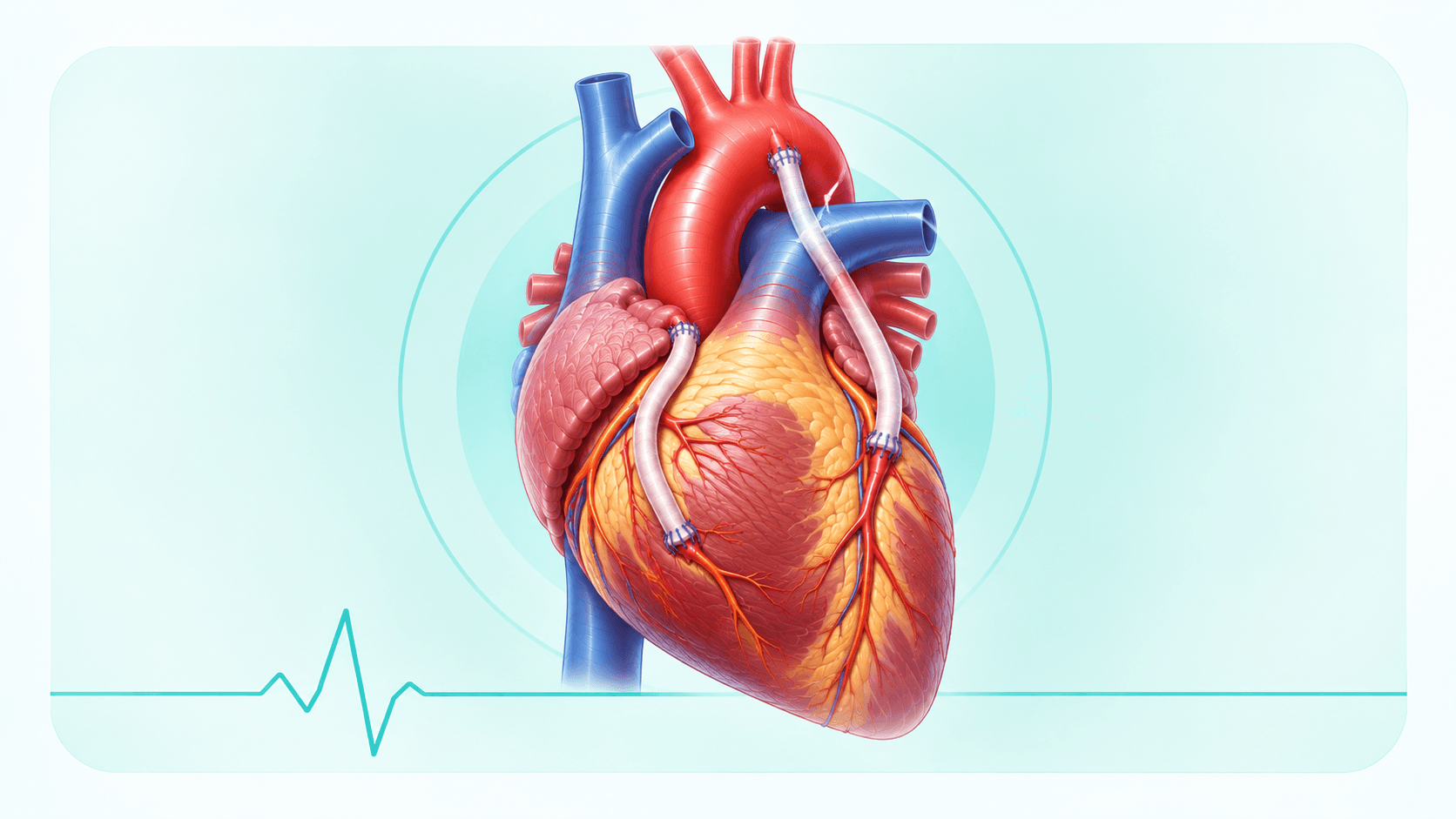
CABG is a surgical procedure that restores blood flow to the heart by creating a new pathway around blocked coronary arteries. Healthy blood vessels taken from the chest, arm or leg are used as grafts to bypass the blockage, allowing oxygen-rich blood to reach the heart muscle again.
The blockage itself is left in place — the operation routes blood around it rather than clearing it out. CABG is recommended for patients with severe coronary artery disease, multiple blocked arteries, left main coronary artery disease, or diabetes with complex coronary blockages.
When it is needed
When is CABG surgery recommended?
Your surgeon may recommend CABG if you have:
Multiple blocked coronary arteries
Significant left main coronary artery disease
Severe angina not relieved by medication
Reduced blood flow to the heart muscle
Failed angioplasty or stent placement
Diabetes with multivessel coronary artery disease
A heart attack requiring surgical revascularisation
The recommendation is usually made jointly by the cardiologist and the surgeon after your angiogram, weighing the pattern of disease against what stenting could achieve. In multivessel and left main disease — and particularly in diabetes — surgery generally gives the more durable result.
Symptoms
Symptoms of coronary artery disease
Chest pain or tightness (angina), typically on exertion
Shortness of breath
Fatigue
Pain in the arm, jaw, neck or back
Reduced exercise tolerance
Irregular heartbeat
Coronary disease can also be silent. Reduced blood flow without any chest pain — silent ischaemia — is particularly common in people with diabetes, which is one reason screening matters in that group even when they feel well.
Chest pain that comes on at rest, lasts more than a few minutes, or is accompanied by sweating, nausea or breathlessness needs emergency assessment, not an outpatient appointment.
Tests
Tests before CABG surgery
To establish whether bypass surgery is appropriate, and to plan it, your doctor may recommend:
Electrocardiogram (ECG)
Echocardiogram
Treadmill stress test
Nuclear stress test
Coronary angiography
CT coronary angiogram
Cardiac catheterisation
Blood tests, including kidney function and blood sugar
The coronary angiogram is the decisive test: it maps exactly which vessels are blocked and how far along each one the disease extends, which is what determines the number of grafts and where they will be placed.
Types of CABG
Types of CABG surgery
Traditional open-heart CABG
Performed through the breastbone with the heart temporarily stopped and its work taken over by the heart-lung machine. A still, bloodless field allows precise grafting, and this remains the established approach for complex multivessel disease.
Off-pump (beating heart) CABG
The grafts are sewn onto the heart while it continues to beat, avoiding the heart-lung machine altogether. Valuable in patients where bypass circulation carries added risk, such as those with significant kidney disease or calcified arteries.
Minimally invasive CABG (MIDCAB)
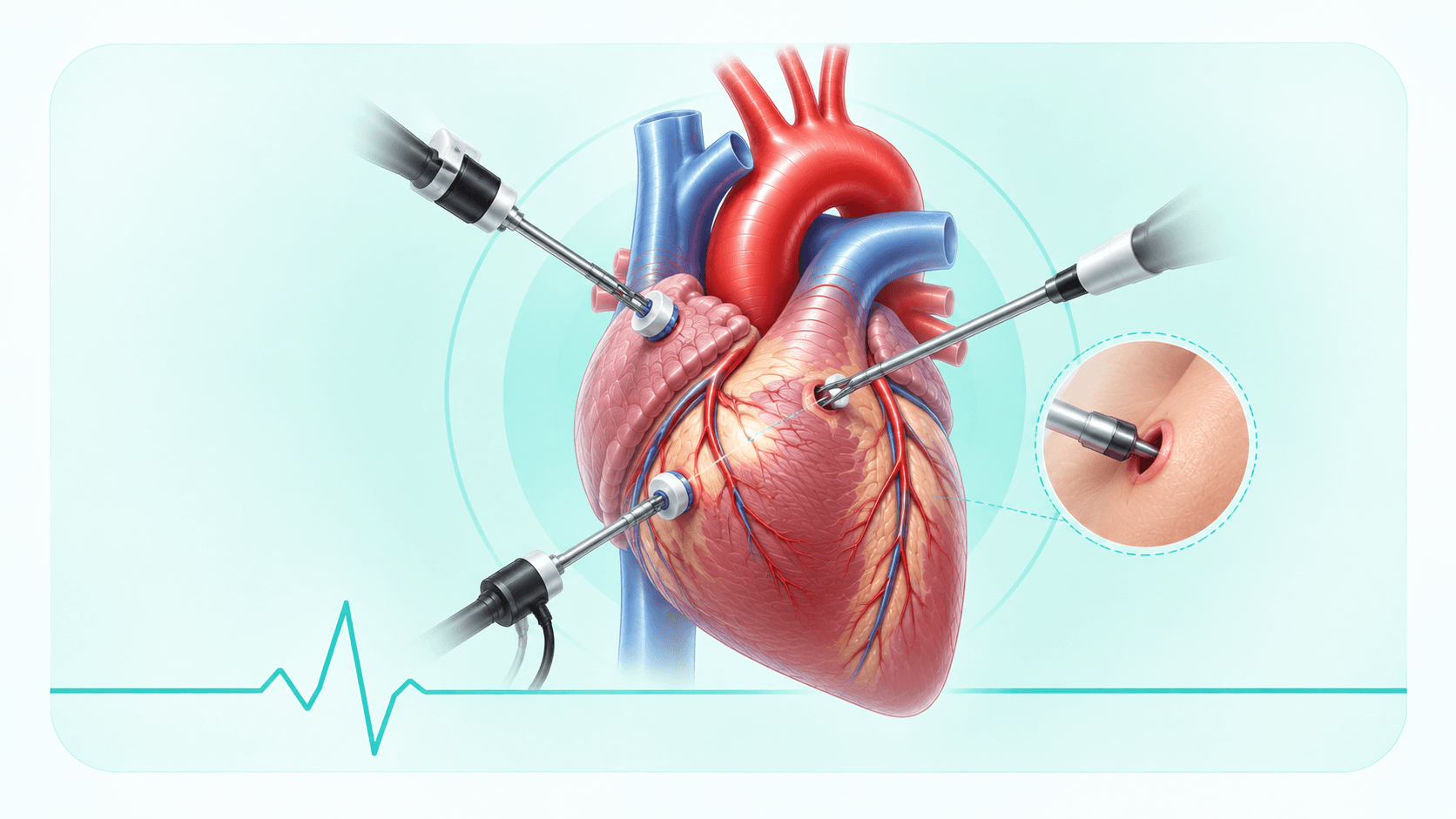
Grafting through a small incision between the ribs rather than dividing the breastbone, in patients whose disease is limited to vessels reachable that way. Less physical disruption, so a quicker early recovery.
Robot-assisted CABG
Robotic instruments passed through small ports let the surgeon harvest the graft and construct the bypass with a magnified, highly stable view. Applied in carefully selected patients.
Hybrid coronary revascularisation
A planned combination: a durable surgical graft to the most important artery, with stents placed by the cardiologist in the remaining vessels. It aims to take the strongest element of each treatment.
How it is done
How is CABG surgery performed?
1
Pre-operative evaluation
Your angiogram, heart function, kidney function, dental health and other medical conditions are reviewed, and the grafting plan is agreed. Blood thinners and diabetes medication are adjusted in advance.
2
General anaesthesia
You are fully asleep throughout, with an anaesthetist monitoring your heart and breathing continuously.
3
Chest incision or minimally invasive access
Access is through the breastbone, or through a small incision between the ribs where a minimally invasive approach has been planned.
4
Harvesting the graft
The internal mammary artery is taken from inside the chest wall, and where more grafts are needed, the radial artery from the forearm or the saphenous vein from the leg.
5
Creating the bypass
Each graft is sewn onto the coronary artery beyond the blockage, and — where the graft is a vein or radial artery — onto the aorta at its other end. This is done either on the heart-lung machine or on the beating heart.
6
Restoring blood flow
Flow through the new grafts is confirmed, and if the heart-lung machine was used, the heart is restarted and weaned off support.
7
Closing the incision
Drains are placed, the breastbone is secured with wires and the layers are closed. The wires stay in permanently and do not normally cause problems.
8
Transfer to intensive care
You are moved to intensive care still asleep on a ventilator, and are usually woken and breathing on your own within a few hours.
Grafts used
Types of bypass graft used
Which vessels are used as grafts has a direct bearing on how long the bypass keeps working, so graft choice is a deliberate part of the plan rather than a technicality.
Internal mammary artery (IMA)
Taken from the inside of the chest wall and the most durable graft available, with excellent very long-term patency. It is the first choice for the left anterior descending artery, the vessel that supplies the largest area of heart muscle.
Radial artery
Harvested from the forearm after checking that the hand's remaining blood supply is sufficient. As an arterial graft it tends to last longer than a vein, and it is often used to extend total arterial grafting to a second or third vessel.
Saphenous vein
Taken from the leg, it is long, versatile and quick to harvest, which makes it valuable when several grafts are needed or in urgent surgery. Veins are more prone to narrowing over the years than arterial grafts, so they are usually combined with at least one arterial graft.
Benefits
Benefits of CABG surgery
Improved blood flow to the heart muscle
Relief from angina, often substantial
A lower risk of heart attack
Improved quality of life and exercise capacity
Better long-term survival in selected patients, particularly those with left main or multivessel disease
A reduced need for repeat procedures compared with stenting in complex disease
Risks
Risks of CABG surgery
The recognised risks of bypass surgery include:
Bleeding, sometimes needing transfusion or a return to theatre
Infection of the wound or chest
Stroke
Heart rhythm disturbances, most commonly atrial fibrillation
Kidney problems, particularly where kidney function was already reduced
Blood clots
Wound healing complications, more likely in diabetes or with a high body weight
An experienced surgical and intensive care team, appropriate patient selection and good preparation — blood sugar control, stopping smoking, dental treatment where needed — all help minimise these risks. Your personal risk is estimated from your heart function, age and other conditions, and is explained to you before you consent.
Recovery
Recovery after CABG surgery
The following is the usual course after conventional bypass surgery. Minimally invasive approaches tend to be quicker through the early stages.
Intensive care
Typically one to two days, with continuous monitoring of your heart rhythm, blood pressure and oxygen levels while drains, lines and the urinary catheter are removed as you improve.
Hospital stay
Usually five to seven days in total. Discharge follows once your rhythm is stable, the wound is healing, you are walking independently and your medication is settled.
Walking and breathing exercises
Both begin within a day or two and are the most important things you do yourself. Deep breathing with the device the physiotherapist gives you keeps the lungs clear; walking a little further each day rebuilds stamina.
Wound care
Keep the chest and leg or arm wounds clean and dry, hug a pillow to support your chest when coughing, and report redness, discharge, fever or any movement or clicking in the breastbone.
Pain management
Chest and harvest-site soreness is expected for a few weeks. Take pain relief regularly rather than waiting for the pain to build, so that you can keep moving and breathing deeply.
Cardiac rehabilitation
A supervised programme of graded exercise, education and risk-factor management, usually beginning a few weeks after discharge. It measurably improves both fitness and confidence, and attending it is strongly advised.
Work and daily activities
Driving is generally resumed at around four to six weeks and desk work at six to eight weeks, with physically demanding work later. Avoid lifting, pushing and pulling until the breastbone has healed at roughly eight to twelve weeks.
Lifestyle changes
Surgery treats the blockages you have; it does not stop new ones forming. Stopping smoking, eating well, exercising and controlling blood pressure, cholesterol and diabetes are what protect the grafts.
Life after bypass
Life after heart bypass surgery
Bypass surgery buys back blood flow, but coronary artery disease is a continuing condition. What happens over the next decade depends heavily on what changes after the operation, and this is the part you control.
Heart-healthy diet
Vegetables, fruit, whole grains, pulses, nuts and fish, with limited salt, sugar, fried food, processed meat and refined carbohydrate. A traditional South Indian diet adapts to this well once the oil, sugar and refined rice are reduced.
Regular exercise
Building up to about 30 minutes of brisk walking or equivalent on most days, starting with the graded plan from cardiac rehabilitation rather than jumping straight in.
Blood pressure control
Keep to the target your doctor sets, take the tablets as prescribed, and check your readings at home if you have been asked to.
Cholesterol management
Statin therapy is standard after bypass surgery and is usually lifelong. It protects the grafts as well as your own arteries, so it should not be stopped because you feel well.
Diabetes control
Good blood sugar control protects both the grafts and the wound healing. Keep to your follow-up with the diabetes team alongside your cardiac reviews.
Stopping smoking
The single most important change. Continuing to smoke markedly shortens graft life; support and medication to help you quit are available and worth asking for.
Routine follow-up
Keep your scheduled appointments, with an ECG and echocardiogram as advised, even during long symptom-free periods.
Medication adherence
Antiplatelet medication, statins and blood pressure tablets work only while they are being taken. Discuss any side effect with your doctor rather than simply stopping.
Conditions
What this treats
Coronary Artery Disease
Blocked or narrowed arteries, including off-pump beating-heart bypass surgery.
Questions
Frequently asked questions
General guidance only. Timings and recommendations vary from patient to patient, and yours are confirmed at consultation.
What is CABG surgery?
Coronary artery bypass grafting is heart surgery in which healthy blood vessels from your chest, arm or leg are used to carry blood around blocked coronary arteries, restoring the supply to the heart muscle. The blockage is bypassed rather than removed.
Is CABG better than angioplasty?
It depends on the pattern of your disease. Angioplasty with stents is less invasive and suits discrete, limited blockages. Bypass surgery generally gives the more complete and durable result in multivessel disease, left main disease, and in people with diabetes and complex blockages. Your cardiologist and surgeon decide together, based on your angiogram.
How long does CABG surgery take?
Usually three to six hours in the operating room, depending on the number of grafts and whether other procedures are done at the same time. Anaesthesia beforehand and transfer to intensive care afterwards add to the total time your family will be waiting.
What is the recovery time after bypass surgery?
Most patients leave hospital in five to seven days and feel much better within four to six weeks. The breastbone heals over roughly eight to twelve weeks, and full fitness, supported by cardiac rehabilitation, generally returns within two to three months.
What is the success rate of CABG?
Outcomes depend on your heart's pumping function, age, kidney function, diabetes and whether the surgery is planned or urgent, so a single percentage would not tell you anything useful about your own case. Dr. Idhrees will discuss the expected outcome for your situation using your angiogram and assessment.
Can bypass surgery prevent future heart attacks?
It substantially reduces the risk by restoring blood flow past the dangerous blockages, and in patients with left main or multivessel disease it improves long-term survival. It does not make you immune: new disease can develop in your own arteries and in the grafts, which is why medication and lifestyle change remain essential afterwards.
How long do bypass grafts last?
Internal mammary artery grafts are the most durable and commonly remain open for decades. Radial artery grafts also do well. Vein grafts are more likely to narrow over the years. Not smoking, taking your statin and antiplatelet medication and controlling blood pressure and diabetes make a genuine difference to how long they last.
When can I drive after CABG?
Usually around four to six weeks after surgery, once you can turn to look over your shoulder and perform an emergency stop without chest pain, and are no longer taking sedating painkillers. Confirm it with your surgeon at follow-up, and check the terms of your motor insurance.
Will I need cardiac rehabilitation?
It is strongly recommended. A supervised rehabilitation programme improves fitness, reduces the chance of readmission and helps you regain confidence in exerting yourself. It also gives you a structured setting in which to work on diet, weight and medication.
Can I return to normal life after bypass surgery?
Most patients do, and many are more active afterwards than they were before, because the angina that had been limiting them is gone. Work, travel, exercise and sexual activity all resume in the weeks and months after surgery, on a timeline your surgeon will set out.
Is minimally invasive CABG suitable for everyone?
No. It depends on which arteries need grafting, how many grafts are required, your chest anatomy and your other medical conditions. Where the disease is extensive, conventional surgery through the breastbone allows the safer and more complete repair, and that is then the better choice.
What foods should I eat after bypass surgery?
Favour vegetables, fruit, whole grains, pulses, nuts and fish; cut down on salt, sugar, fried food, processed meat and refined carbohydrate. If you have diabetes, follow the plan from your diabetes team. In the first few weeks, smaller and more frequent meals are often easier while your appetite recovers.
The information on this page is general and is not a substitute for medical advice. Treatment suitability, timings and recovery are decided case by case after clinical assessment. If you are weighing up surgery, ask about a second opinion.
Related Treatments
Other cardiac and aortic procedures offered by Dr. Idhrees.
Aortic Surgery & Aortic Dissection Treatment
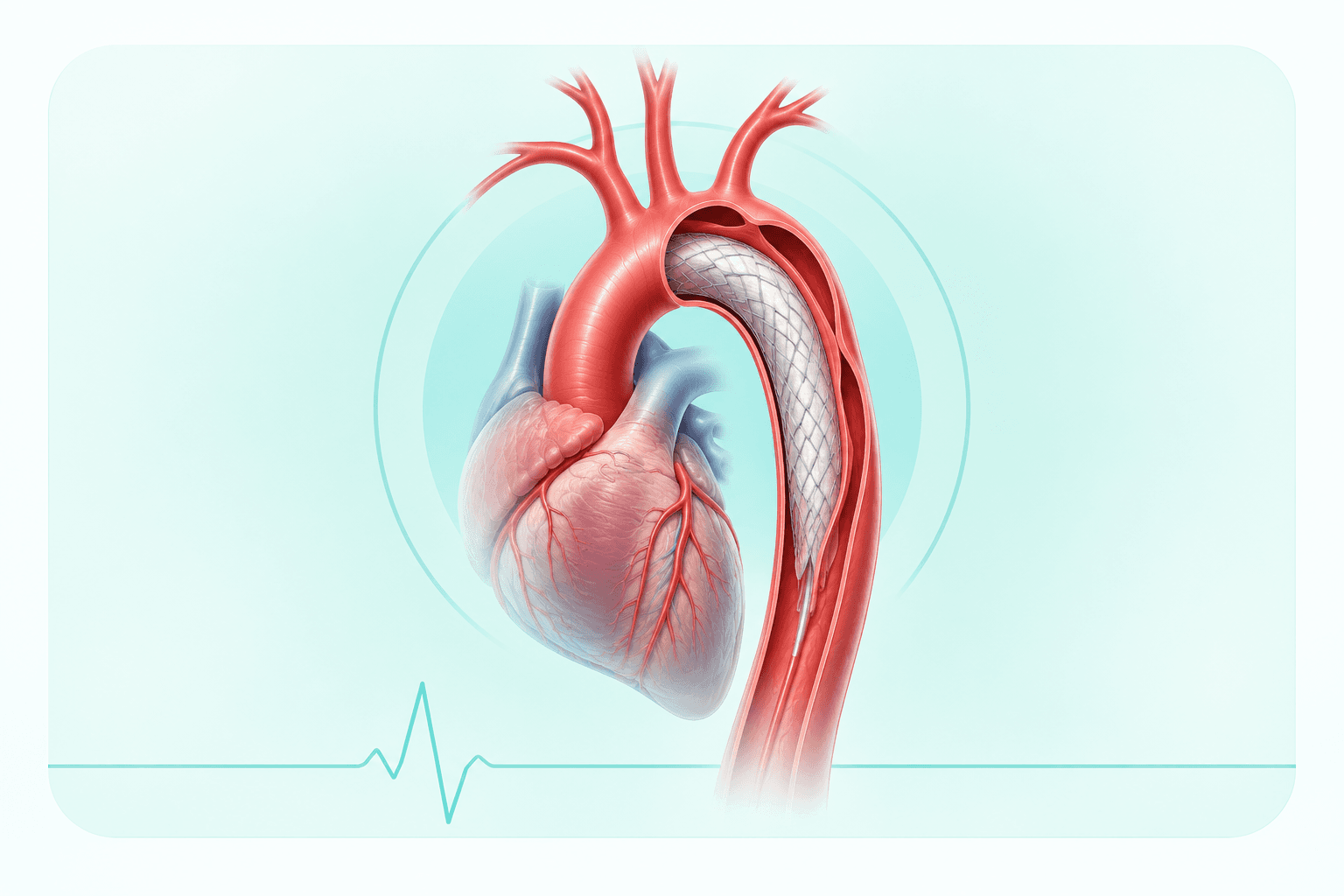
As one of the few surgeons in India with specialised training in complex aortic surgery, Dr. Idhrees treats aortic aneurysms, acute aortic dissections, and performs advanced procedures such as the frozen elephant trunk technique for arch repair.
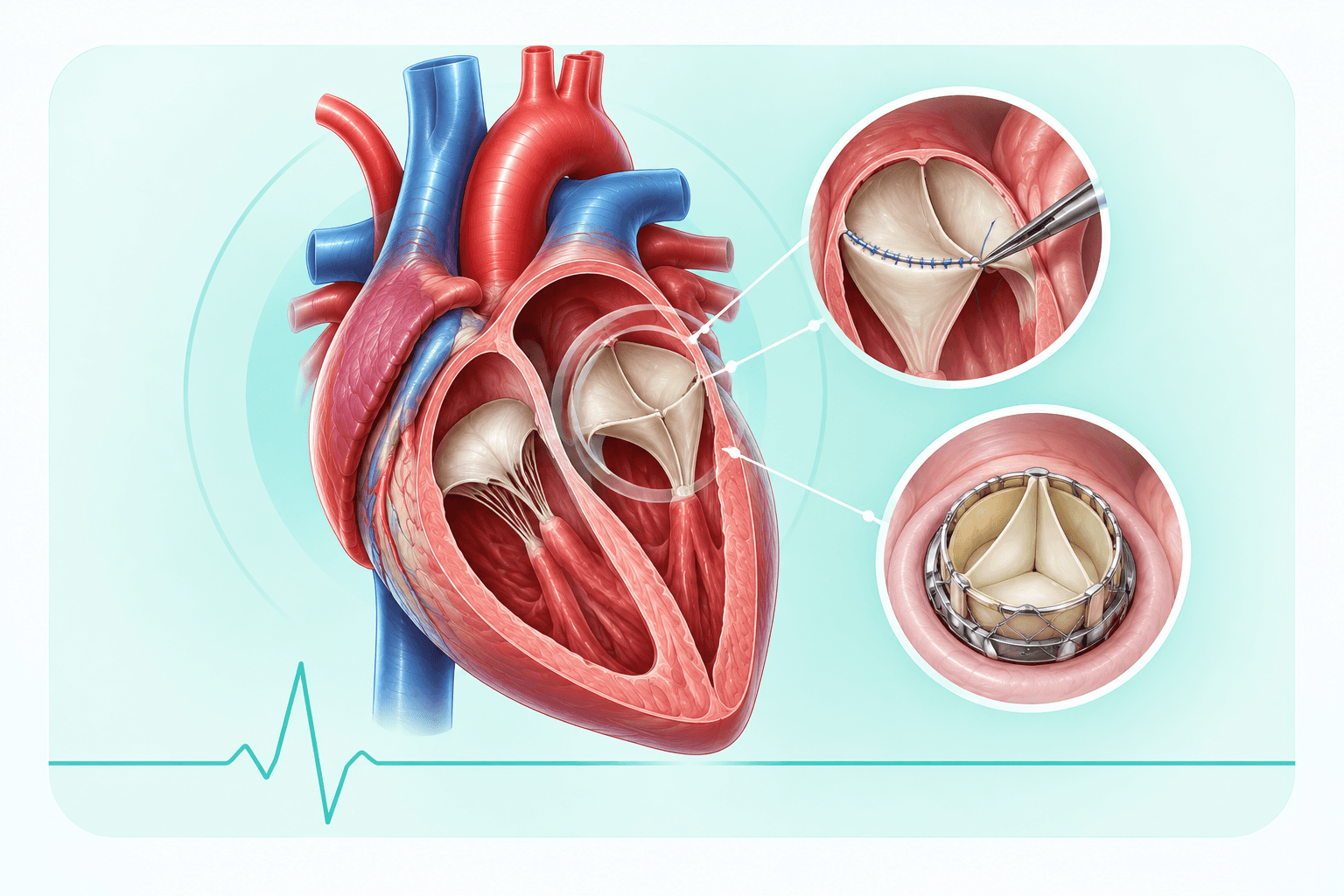
Expert surgical repair and replacement of damaged or diseased heart valves — including mitral, aortic, and tricuspid valve surgery — restoring normal heart function with a focus on long-term durability.