Heart valve replacement is a life-saving procedure performed when one or more of the heart valves become severely narrowed (stenosis) or leaky (regurgitation), preventing the heart from pumping blood efficiently. Left untreated, advanced valve disease can lead to heart failure, stroke, irregular heart rhythms and other serious complications.
Dr. Idhrees, Senior Cardiovascular and Thoracic Surgeon with over 18 years of experience, provides advanced heart valve replacement surgery in Chennai using evidence-based techniques — including surgical aortic valve replacement (SAVR), minimally invasive valve surgery, and transcatheter valve replacement (TAVR) where appropriate. Every treatment plan is tailored to the patient's condition, lifestyle and long-term health goals.
What it is
What is heart valve replacement?
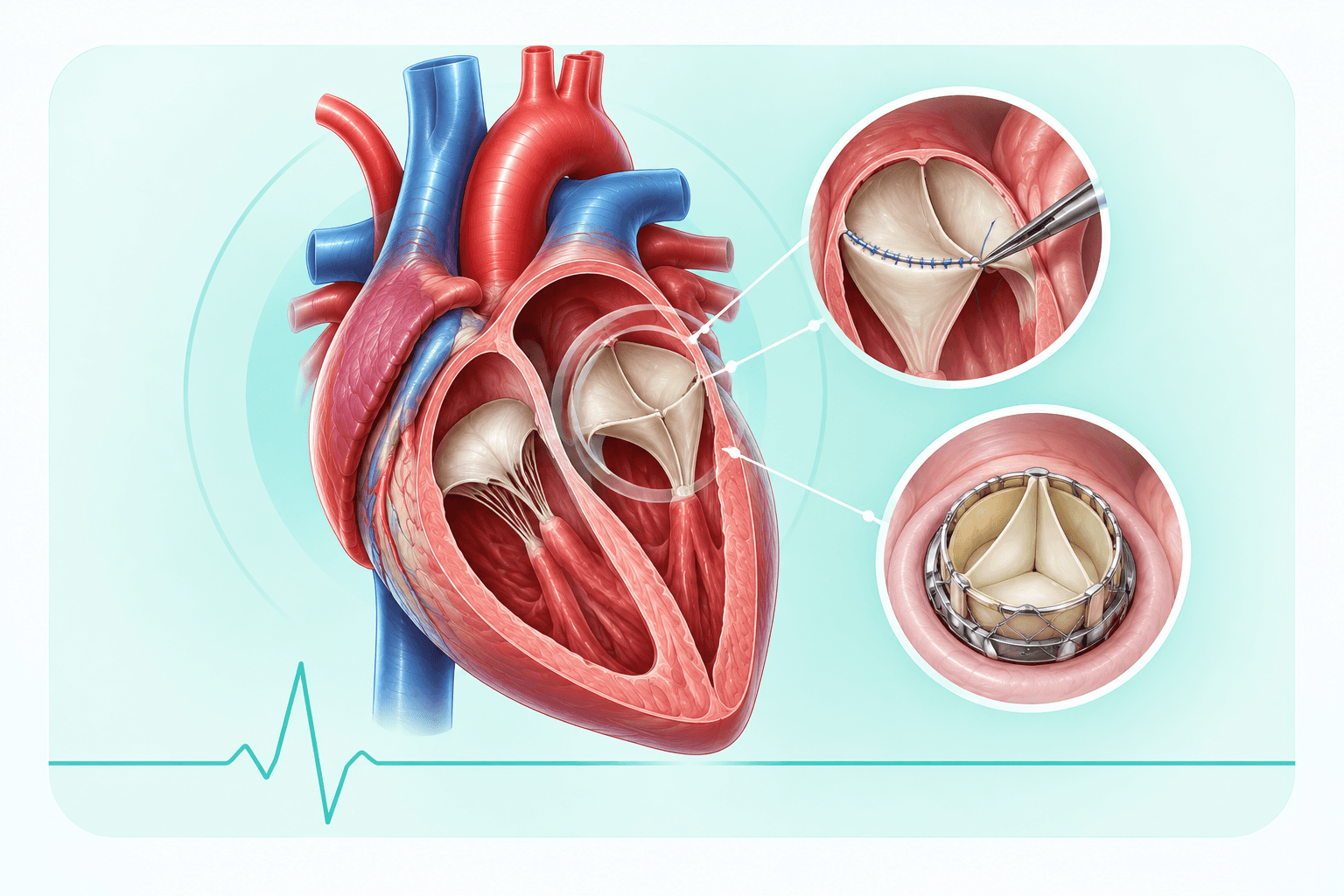
Heart valve replacement is a surgical or catheter-based procedure that removes a damaged heart valve and replaces it with an artificial or biological valve. The new valve restores normal blood flow through the heart, relieves symptoms and improves overall heart function.
Replacement is recommended when repair is not possible, or when the valve has severe structural damage. Where the valve can be repaired instead — which is often the case with the mitral valve — repair is usually preferred, because it preserves your own tissue.
When it is needed
When do you need heart valve replacement?
Your cardiothoracic surgeon may recommend valve replacement if you have:
Severe aortic stenosis
Severe mitral regurgitation
Tricuspid valve disease
Pulmonary valve disease
Congenital valve abnormalities
Infective endocarditis affecting the valve
Degenerative or calcified heart valves
The timing matters as much as the decision. Surgery is generally advised once the valve disease is severe and either causing symptoms or beginning to strain the heart muscle, because operating before that strain becomes permanent gives the heart the best chance of recovering its function.
Symptoms
Symptoms of severe heart valve disease
Valve disease often develops slowly, and it is common to adjust your activity without noticing that you have done so. Symptoms that come on with exertion, or that have crept up over months, are worth reporting.
Chest pain or tightness
Shortness of breath
Fatigue
Dizziness or fainting
Palpitations
Swelling in the legs or ankles
Reduced exercise tolerance
Valves treated
Types of heart valve replacement
Aortic valve replacement (AVR)
Treatment for severe narrowing or leakage of the aortic valve, the valve between the left ventricle and the aorta. This is the most commonly replaced valve.
Mitral valve replacement (MVR)
Recommended when the mitral valve cannot be repaired. Where repair is feasible it is generally preferred, so the valve is assessed carefully before a replacement is planned.
Tricuspid valve replacement
Performed for severe tricuspid valve disease, often alongside surgery on another valve.
Pulmonary valve replacement
Usually performed for congenital heart defects, or for severe pulmonary valve disease later in life.
Valve types
Types of replacement heart valve
Two families of prosthetic valve are in routine use. The choice is one of the most personal decisions in valve surgery, and it is made with you rather than for you.
Biological (tissue) valves
Made from specially treated animal or human tissue. They generally do not require lifelong blood-thinning medication, but they wear out over time and may need replacing after a number of years.
Mechanical valves
Constructed from durable materials such as pyrolytic carbon and metal. They are built for long-term durability, but require lifelong anticoagulation therapy to reduce the risk of blood clots forming on the valve.
Mechanical vs tissue
Mechanical valve vs tissue valve
Mechanical valve
Tissue valve
Durability
Designed to last for the patient's lifetime
Typically 10 to 20 years before it wears out
Blood thinners
Lifelong anticoagulation, with regular blood tests
Usually only short term after surgery
Generally suits
Younger patients, and those already on anticoagulation for another reason
Older patients, and those who cannot or prefer not to take lifelong anticoagulants
Chance of reoperation
Lower
Higher over time, as the valve degenerates
Points to weigh
Bleeding risk, the discipline of regular monitoring, and an audible valve click some patients notice
Planning for a possible second procedure later, which in some cases can be done by catheter
Age, whether you are planning a pregnancy, your bleeding risk, your access to anticoagulation monitoring and your own preference all feed into the decision. Dr. Idhrees will go through the trade-off with you before surgery is scheduled.
Procedures
Heart valve replacement procedures
Surgical aortic valve replacement (SAVR)
The established open operation: the diseased aortic valve is removed and a prosthetic valve is sewn into place, with the heart supported by the heart-lung machine. It remains the reference treatment for most patients fit for surgery.
Transcatheter aortic valve replacement (TAVR)
A replacement valve is delivered on a catheter, usually from an artery in the groin, and expanded inside the diseased valve without opening the chest. Suitability depends on your anatomy and surgical risk, and is decided jointly with the cardiology team.
Mitral valve replacement
Replacement of the mitral valve where it is too damaged to repair, preserving the surrounding structures wherever possible to protect the pumping function of the left ventricle.
Minimally invasive valve surgery
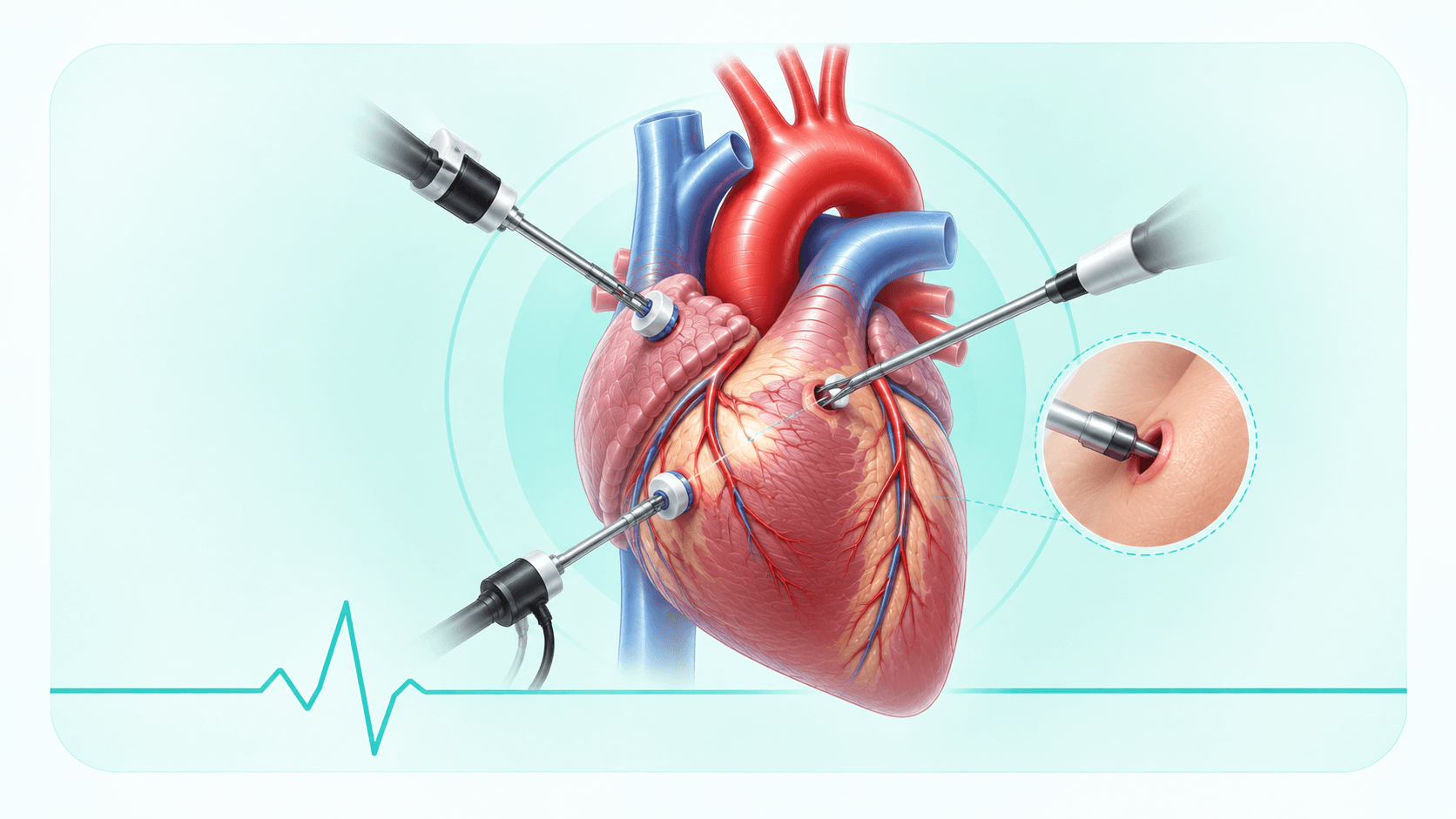
Valve replacement performed through a small incision between the ribs or a partial division of the breastbone, avoiding a full sternotomy in suitable patients.
Ross procedure
Your own pulmonary valve is moved into the aortic position and the pulmonary valve is replaced with a graft. Considered in selected younger patients, where it avoids lifelong anticoagulation.
How it is done
How is heart valve replacement performed?
The pathway below is the usual sequence for a planned valve replacement.
1
Comprehensive evaluation
A full assessment of your symptoms, heart function, other medical conditions and dental health, which together determine whether and when to operate.
2
Imaging and diagnostic tests
An echocardiogram grades the valve disease; a coronary angiogram, CT and blood tests complete the picture and confirm which valve type suits you.
3
General anaesthesia
You are fully asleep for the procedure, with an anaesthetist monitoring you throughout.
4
Surgical or catheter-based access
Access is gained through the breastbone, through a small incision between the ribs, or via a catheter in the groin, according to the plan agreed with you.
5
Removal of the diseased valve
In open surgery the damaged valve is excised and the surrounding tissue prepared. In a transcatheter procedure the old valve is pushed aside rather than removed.
6
Implantation of the new valve
The prosthetic valve is secured in position — sewn in during open surgery, or expanded into place over a catheter.
7
Confirmation of valve function
Echocardiography in the operating room confirms the valve is opening and closing correctly and that there is no leak around it before the procedure is completed.
8
Recovery in intensive care
You are transferred to intensive care for close monitoring of your heart rhythm, blood pressure and breathing as the anaesthetic wears off.
Benefits
Benefits of heart valve replacement
Restores efficient blood flow through the heart
Relieves breathlessness, chest tightness and fatigue
Improves exercise capacity
Reduces the risk of progressing to heart failure
Supports better long-term survival in patients with severe valve disease
Improves day-to-day quality of life
Risks
Risks and possible complications
Valve replacement is major surgery and carries recognised risks, which are discussed with you in full before you consent:
Bleeding, occasionally requiring transfusion or a return to theatre
Infection of the wound, the chest or, rarely, the new valve
Stroke
Heart rhythm abnormalities, sometimes needing a pacemaker
Blood clots, particularly if anticoagulation is not maintained
Kidney injury
Valve-related problems such as a leak around the valve or later valve degeneration
Careful evaluation before surgery, an experienced surgical and intensive care team, and disciplined follow-up all help reduce these risks. Your individual risk reflects your age, heart function and other medical conditions, and is explained to you specifically rather than as an average.
Recovery
Recovery after heart valve replacement
The stages below are typical. Minimally invasive and transcatheter procedures generally move through them faster than open surgery.
Intensive care monitoring
Usually a day or two in intensive care, where your heart rhythm, blood pressure and fluid balance are watched closely and drains and lines are removed as you stabilise.
Hospital stay
Commonly five to seven days in total after open valve surgery, and often less after a transcatheter procedure. You go home once you are stable, mobile and your medication is settled.
Pain management
Regular pain relief keeps the chest soreness manageable. Staying comfortable is not a luxury — it is what allows you to breathe deeply and walk, which is how complications are avoided.
Walking and breathing exercises
Both start within a day or two of surgery, guided by a physiotherapist, and continue at home. They protect against chest infection, clots and stiffness.
Wound care
Keep the wound clean and dry, support your chest when coughing, and report increasing redness, discharge, fever or any clicking in the breastbone.
Cardiac rehabilitation
A structured programme of supervised exercise and education, usually starting a few weeks after discharge, that rebuilds your fitness and confidence.
Medication adherence
If you have a mechanical valve, your anticoagulant and its monitoring are lifelong and not to be interrupted without medical advice. Tissue valve patients usually take a short course instead.
Follow-up echocardiograms
A baseline echocardiogram is done before or shortly after discharge, and then at regular intervals to confirm the valve is working well — annually in most cases once you are stable.
Work and normal activity
Light activity resumes at home immediately; driving and desk-based work typically at around six weeks after open surgery, with heavy lifting avoided until the breastbone has healed at roughly eight to twelve weeks.
Protecting your valve
Protecting your new valve long term
A prosthetic valve needs looking after. Keep up your dental care and attend regular check-ups, because untreated dental infection is a recognised route to infection of the valve itself. Tell any doctor or dentist treating you that you have a prosthetic heart valve, and ask about antibiotic cover before dental or surgical procedures.
Report a persistent fever, night sweats or unexplained weight loss promptly rather than waiting — valve infection is treatable, but far more easily when it is caught early. Keep your follow-up appointments and echocardiograms even when you feel completely well.
Conditions
What this treats
Heart Valve Conditions
Surgical repair and replacement for damaged mitral, aortic and tricuspid valves.
Questions
Frequently asked questions
General guidance only. Timings and recommendations vary from patient to patient, and yours are confirmed at consultation.
What is heart valve replacement surgery?
It is a procedure in which a severely damaged heart valve is replaced with a mechanical or biological (tissue) valve, restoring normal blood flow through the heart. It can be done through open surgery, through a small incision between the ribs, or in selected cases by catheter.
How long does heart valve replacement take?
A single-valve open replacement usually takes around three to four hours in the operating room, longer if more than one valve is treated or bypass grafting is done at the same time. A transcatheter aortic valve replacement is typically shorter. Allow additional time either side for anaesthesia and transfer to intensive care.
What is the difference between mechanical and tissue valves?
A mechanical valve is made of durable man-made materials and is designed to last for life, but it requires lifelong blood-thinning medication with regular monitoring. A tissue valve is made from treated biological tissue and usually avoids long-term blood thinners, but it wears out over time and may need replacing after roughly 10 to 20 years.
Is TAVR better than open-heart surgery?
Not universally — it is an alternative for particular patients. TAVR avoids opening the chest and offers a quicker recovery, which is valuable where surgery carries higher risk. Open surgical replacement remains the reference treatment for many patients, especially younger ones, and suitability depends on your valve anatomy and overall risk. The decision is made jointly by the surgical and cardiology teams.
How long do artificial heart valves last?
Mechanical valves are designed to last for the rest of your life. Tissue valves commonly last around 10 to 20 years, with younger patients tending to wear them out faster. Regular echocardiograms are how valve function is tracked over time.
What is the recovery time after valve replacement?
Most patients are home within five to seven days of open surgery and feel substantially better within four to six weeks, with the breastbone healing over roughly eight to twelve weeks. Full return to fitness, helped by cardiac rehabilitation, generally takes two to three months. Minimally invasive and transcatheter procedures are usually quicker.
Can heart valve disease be treated without surgery?
Mild and moderate valve disease is often managed with medication and monitoring, and medication can ease symptoms in severe disease. But tablets cannot reopen a narrowed valve or seal a leaking one — once valve disease is severe and causing symptoms or strain on the heart, repair or replacement is the treatment that changes the outlook.
Is heart valve replacement a major surgery?
Yes. Open valve replacement is major heart surgery involving the heart-lung machine, a stay in intensive care and a planned recovery period. It is also a well-established and routinely performed operation, and minimally invasive or transcatheter options reduce the physical impact for suitable patients.
What is the success rate of heart valve replacement?
Outcomes depend on which valve is being treated, your heart's pumping function, your age and your other medical conditions, so a single quoted percentage would be misleading. Dr. Idhrees will discuss the expected outcome for your own situation, based on your echocardiogram and assessment, before surgery is scheduled.
When can I return to normal activities?
Walking and light household activity start straight away. Driving and office work are usually possible at around six weeks after open surgery, and heavy lifting, straining and contact sport after the breastbone has healed at roughly eight to twelve weeks. Your surgeon and rehabilitation team will confirm the timings for you.
Will I need blood-thinning medication after surgery?
With a mechanical valve, yes — lifelong anticoagulation with regular blood tests to keep it in the correct range. With a tissue valve it is usually only a short course after surgery, unless you need it for another reason such as atrial fibrillation.
Can minimally invasive valve replacement be done for everyone?
No. It depends on which valve is affected, your chest and vessel anatomy, whether you have had previous heart surgery, and whether anything else needs doing at the same time. Where it is not suitable, conventional surgery is the safer choice — and that judgement is made on your imaging before the operation is planned.
Will I be able to hear my new valve?
Some patients with a mechanical valve notice a faint click, particularly in a quiet room at night. It is normal, it reflects the valve working as designed, and most people stop noticing it within a few months.
The information on this page is general and is not a substitute for medical advice. Treatment suitability, timings and recovery are decided case by case after clinical assessment. If you are weighing up surgery, ask about a second opinion.
Related Treatments
Other cardiac and aortic procedures offered by Dr. Idhrees.
Aortic Surgery & Aortic Dissection Treatment
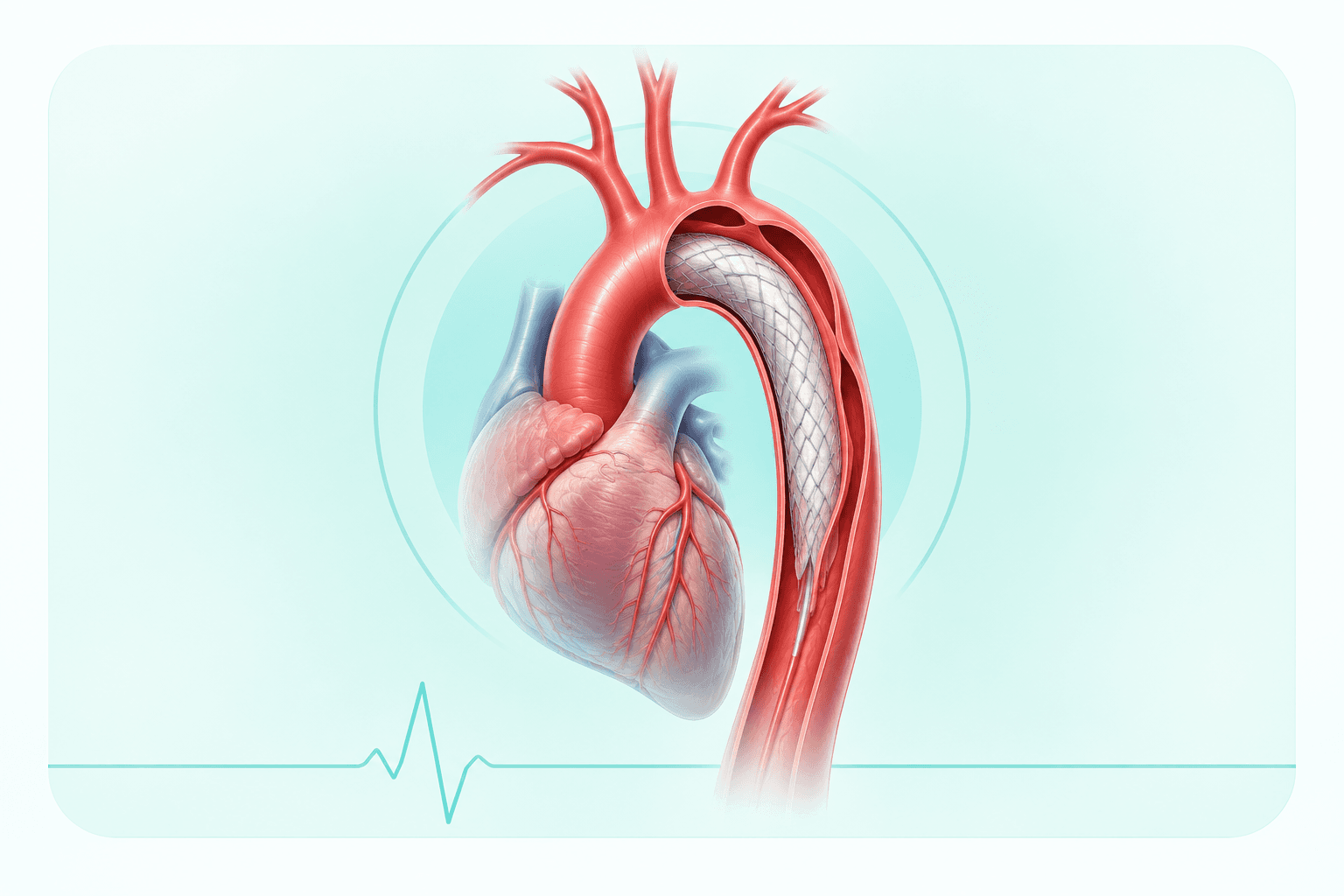
As one of the few surgeons in India with specialised training in complex aortic surgery, Dr. Idhrees treats aortic aneurysms, acute aortic dissections, and performs advanced procedures such as the frozen elephant trunk technique for arch repair.
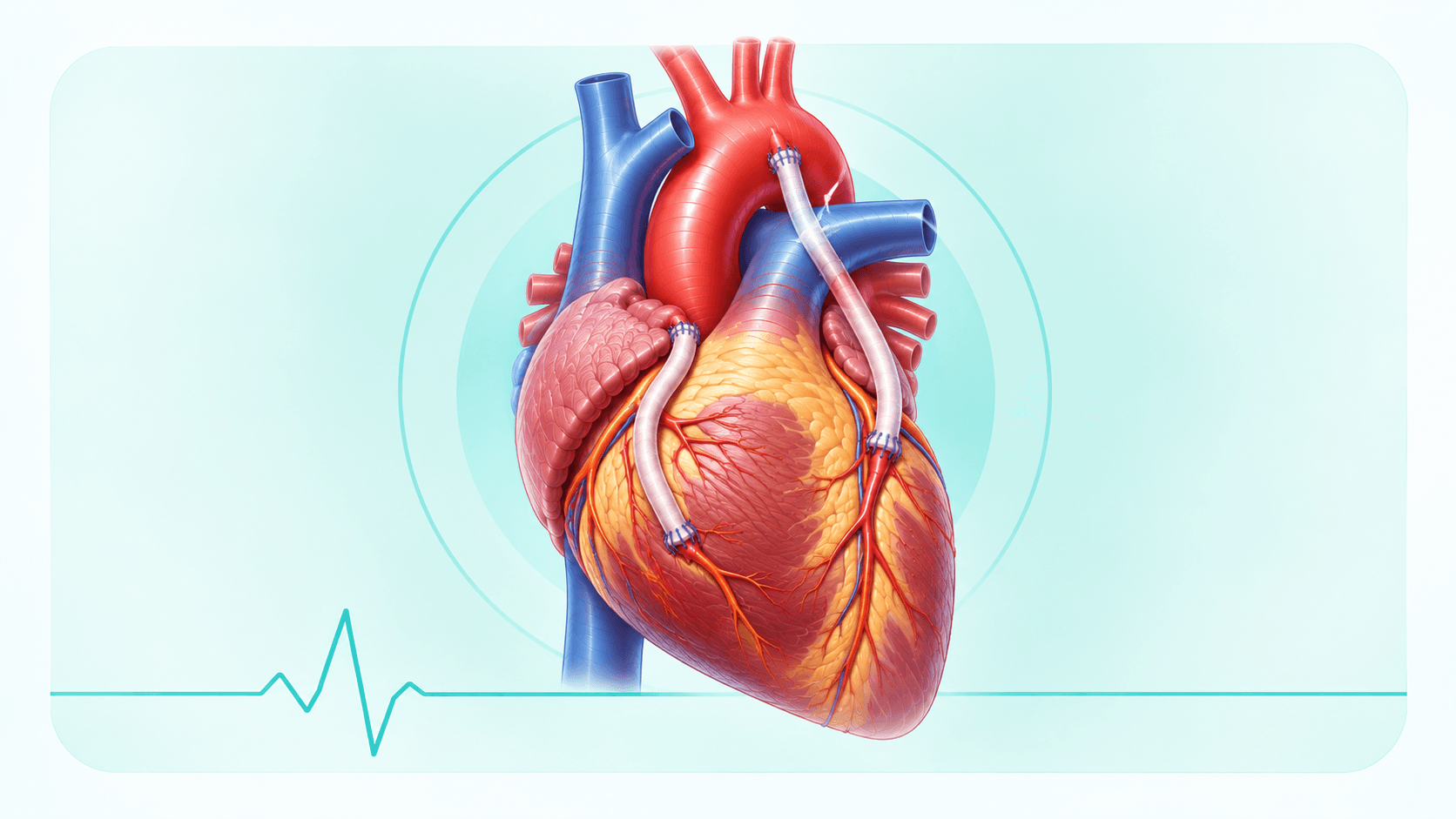
Dr. Idhrees performs advanced coronary artery bypass grafting (CABG) to restore healthy blood flow to the heart in patients with blocked coronary arteries, using both conventional and beating-heart (off-pump) techniques for faster recovery.