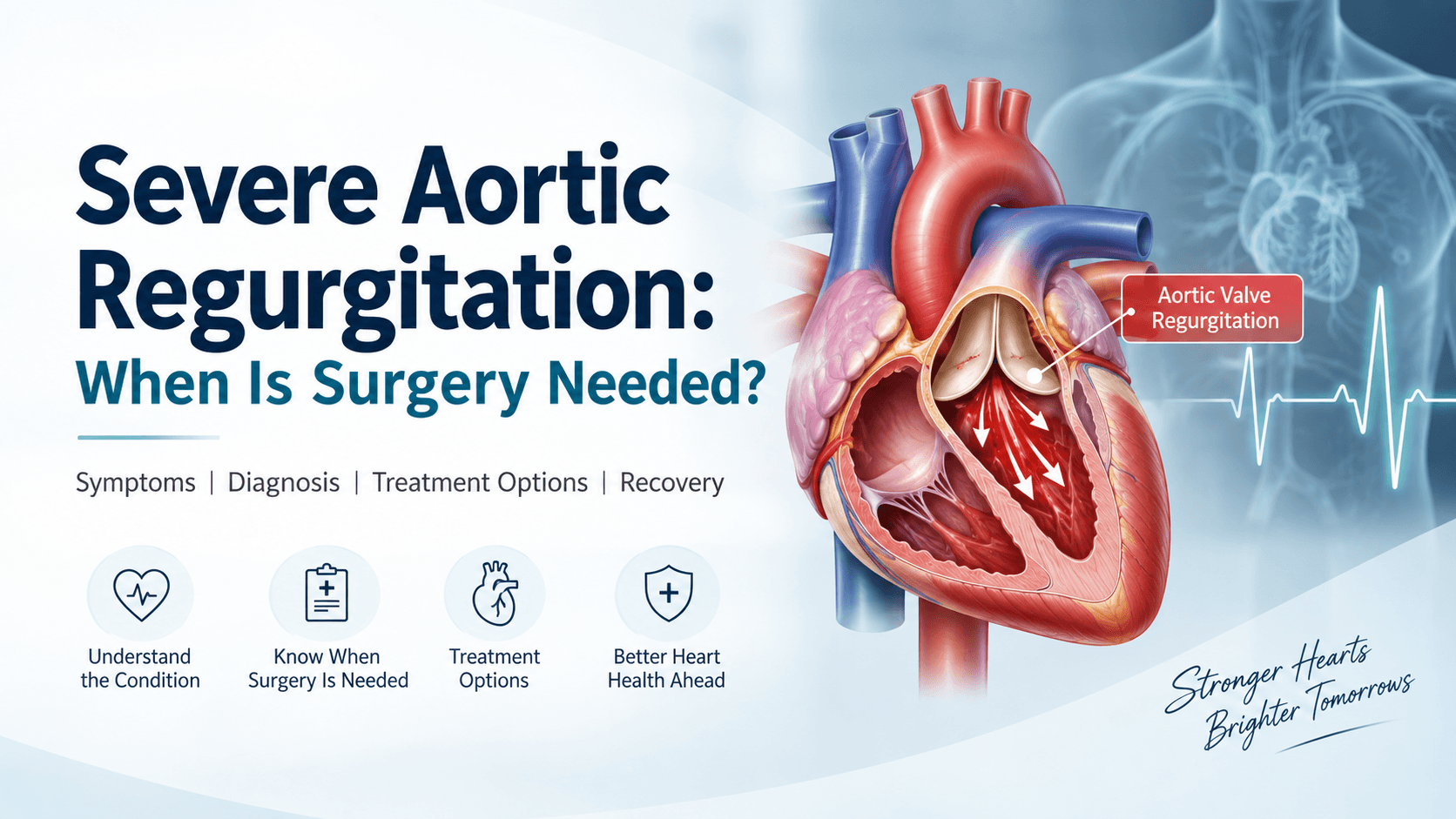

Severe aortic regurgitation (AR) is a serious heart valve condition in which the aortic valve does not close properly, allowing blood to flow backward from the aorta into the left ventricle.
A small amount of aortic valve leakage may not cause symptoms or require immediate treatment. However, severe aortic regurgitation can gradually put extra pressure and volume on the heart, causing the left ventricle to enlarge and weaken over time.
So, one of the most important questions for patients diagnosed with severe aortic regurgitation is: when is aortic valve surgery actually needed?
The answer depends on several factors — including symptoms, the severity of valve leakage, heart function, left ventricular size, the condition of the aorta and the patient’s overall surgical risk.
This guide explains severe aortic regurgitation, its symptoms, diagnosis, treatment options and when surgery may be recommended.
Medical note: Guideline thresholds are decision aids, not standalone rules. Every treatment decision must be individualized after a full assessment of the valve, the heart, the aorta and the patient’s overall risk.
What Is Aortic Regurgitation?
Aortic regurgitation, also called aortic valve regurgitation or aortic valve insufficiency, occurs when the aortic valve does not close completely.
Normally, the aortic valve opens when the heart pumps blood from the left ventricle into the aorta. It then closes to prevent blood from flowing backward. When the valve leaks, some blood returns to the left ventricle.
This means the heart has to work harder to pump enough blood forward to the body. Over time, significant leakage can cause the left ventricle to enlarge and eventually affect heart function.
What Is Severe Aortic Regurgitation?
Aortic regurgitation can be classified as mild, moderate or severe based on clinical and imaging findings. Severe aortic regurgitation means there is significant backward blood flow through the aortic valve.
However, the word “severe” does not automatically mean that every patient needs immediate surgery.
Doctors also evaluate:
- Whether the patient has symptoms
- Left ventricular ejection fraction (LVEF)
- Left ventricular size
- Left ventricular end-systolic diameter (LVESD)
- Changes in heart function over time
- Aortic root or ascending aorta size
- Cause of the valve disease
- Patient’s age and overall health
- Surgical risk
This is why regular follow-up and echocardiography are important even when a patient feels well.
What Causes Severe Aortic Regurgitation?
Several conditions can damage the aortic valve or the aorta surrounding it. Common causes include:
Bicuspid Aortic Valve
A bicuspid aortic valve (BAV) has two leaflets instead of the usual three. It is a congenital condition that can cause aortic valve dysfunction and enlargement of the ascending aorta.
Aortic Root Enlargement
An enlarged aortic root can prevent the aortic valve leaflets from closing properly, resulting in aortic regurgitation.
Aortic Valve Infection
Infective endocarditis can damage the valve and cause severe aortic regurgitation.
Aortic Dissection
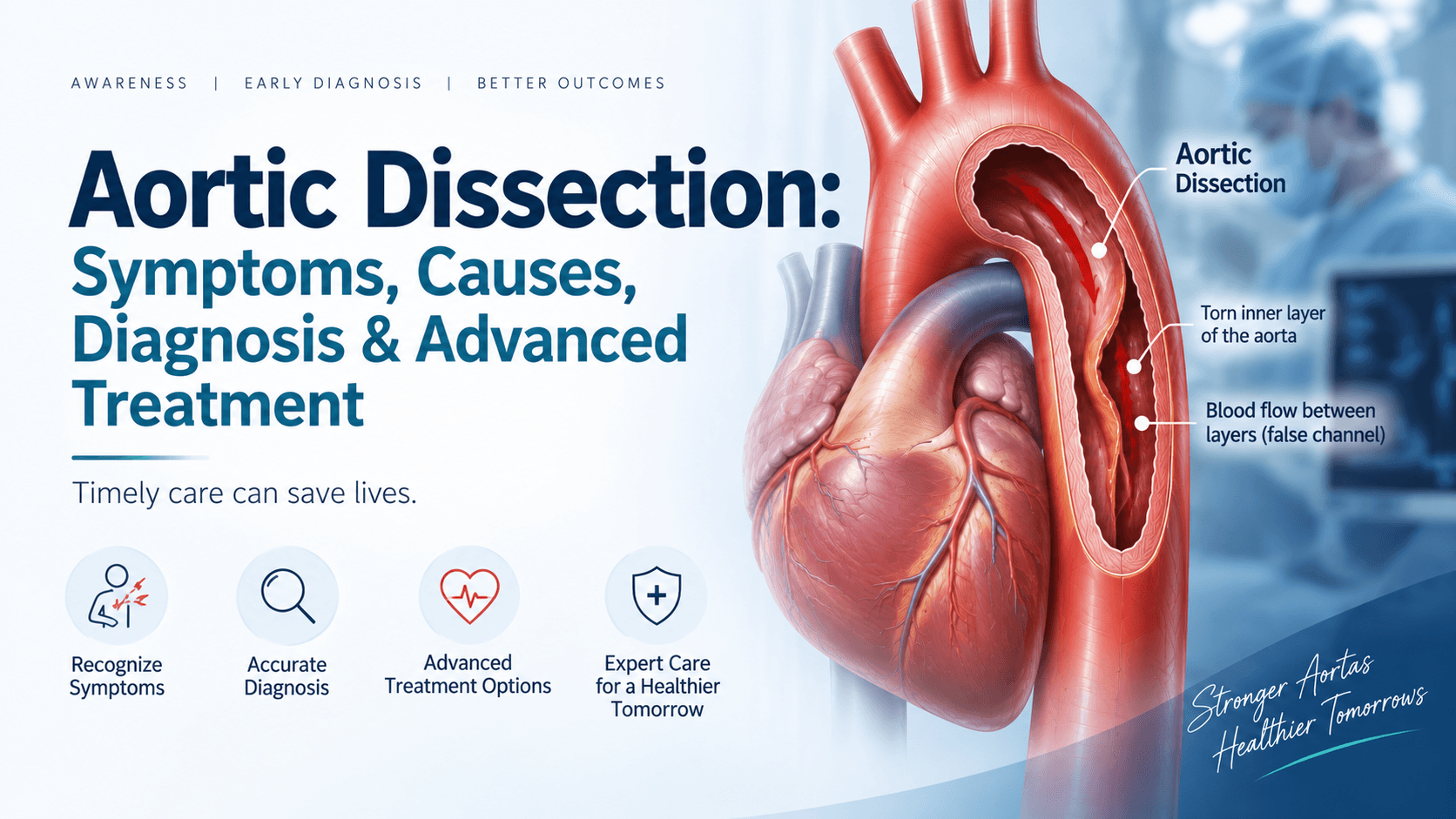
An aortic dissection can interfere with the normal function of the aortic valve and cause acute severe aortic regurgitation.
Rheumatic Valve Disease
Previous rheumatic fever can damage the aortic valve and lead to chronic valve disease.
Degenerative Valve Disease
Changes to the valve structure with age can also contribute to aortic regurgitation.
What Are the Symptoms of Severe Aortic Regurgitation?
Aortic regurgitation may remain silent for years. As the condition becomes more severe, symptoms may develop gradually.
Common aortic regurgitation symptoms include:
- Shortness of breath
- Breathlessness during exercise
- Fatigue
- Reduced exercise capacity
- Chest discomfort
- Palpitations
- Awareness of a forceful heartbeat
- Dizziness
- Swelling of the legs or ankles
Some people may notice that activities they previously performed easily have become increasingly difficult. For example, a person may develop breathlessness while climbing stairs or walking long distances.
Can Severe Aortic Regurgitation Occur Without Symptoms?
Yes. This is one of the most important things patients should understand.
A patient can have severe aortic regurgitation and still feel relatively well. The heart can compensate for the increased workload for a long time. However, the left ventricle may gradually enlarge or lose its pumping function even before significant symptoms appear.
Therefore, absence of symptoms does not always mean absence of risk. Regular echocardiographic monitoring helps doctors identify changes in heart size and function before irreversible damage occurs.
How Is Severe Aortic Regurgitation Diagnosed?
The main test used to evaluate aortic regurgitation is an echocardiogram.
Echocardiogram
An echocardiogram can help doctors assess:
- Aortic valve structure
- Severity of aortic regurgitation
- Left ventricular size
- Left ventricular function
- Aortic root size
- Ascending aorta
Doppler echocardiography can also assess the direction and characteristics of blood flow across the valve.
If echocardiographic findings are unclear or do not match the clinical picture, additional imaging such as cardiac MRI, CT or transesophageal echocardiography may be used.
When Is Surgery Needed for Severe Aortic Regurgitation?
This is the central question for patients with severe AR.
According to current guidelines, surgery is recommended for patients with severe aortic regurgitation who develop symptoms, provided the operative risk is not prohibitive.
But symptoms are not the only factor. Surgery may also be recommended when severe aortic regurgitation begins to affect the heart, even if the patient has few or no symptoms.
Doctors particularly look at:
1. Symptoms
If severe aortic regurgitation is causing symptoms such as:
- Breathlessness
- Chest pain
- Reduced exercise tolerance
- Fatigue
- Heart failure symptoms
surgery may be recommended.
2. Left Ventricular Function
The left ventricular ejection fraction (LVEF) measures how well the left ventricle pumps blood.
Current European guidance recommends intervention in asymptomatic severe AR when LVEF falls to 50% or below, while contemporary American guidance uses 55% or below as a Class I indication for aortic valve replacement in asymptomatic severe AR.
3. Left Ventricular Enlargement
The heart can enlarge because it is handling an increased volume of blood.
An LVESD greater than 50 mm, or an indexed LVESD greater than 25 mm/m², is an important threshold used in guideline-based decision-making.
4. Enlargement of the Aorta
If severe aortic regurgitation is associated with enlargement of the aortic root or ascending aorta, surgery may involve both the valve and the aorta.
In selected patients undergoing aortic valve surgery, the 2025 ESC/EACTS guidelines state that replacement of the aortic root or ascending aorta should be considered when the maximum diameter is ≥45 mm and surgical risk is low.
Important: These measurements are not standalone rules for every patient. Aortic size must be interpreted alongside body size, valve anatomy, growth rate, genetic conditions, family history and other risk factors.
What Happens If Severe Aortic Regurgitation Is Not Treated?
The heart may initially compensate for the leaking valve. Over time, however, chronic severe aortic regurgitation can cause a chain of changes: aortic valve leakage leads to increased workload, which leads to left ventricular enlargement, reduced heart function and eventually heart failure.
Possible complications include:
- Left ventricular enlargement
- Reduced heart function
- Heart failure
- Reduced exercise capacity
- Abnormal heart rhythms
- Progressive symptoms
This is why the timing of surgery is important. The goal is not simply to wait until the patient becomes extremely symptomatic. The goal is to treat the valve at an appropriate stage before permanent heart damage develops.
What Surgery Is Used for Severe Aortic Regurgitation?
The appropriate procedure depends on the cause of the regurgitation and the condition of the valve and aorta.
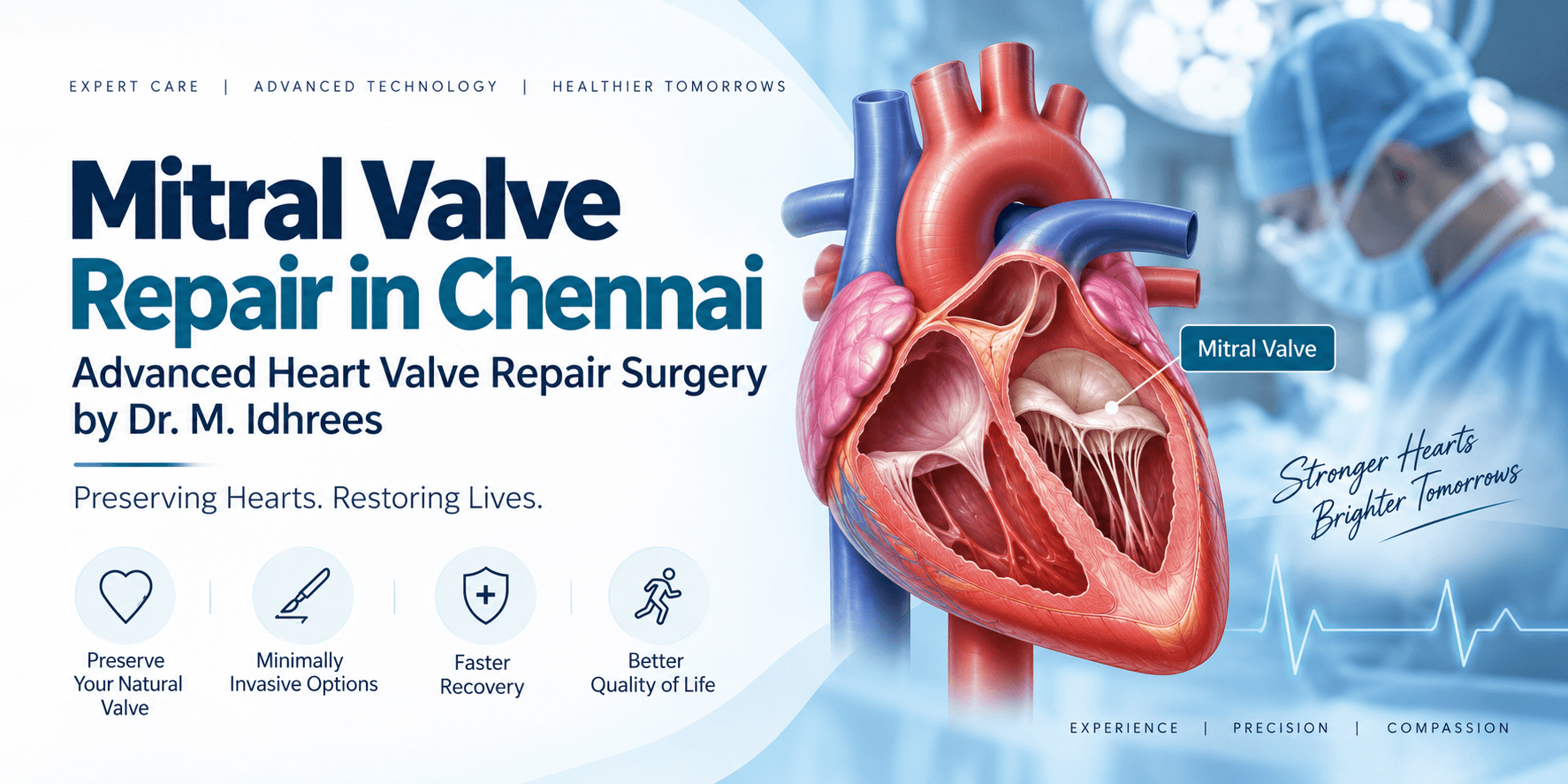
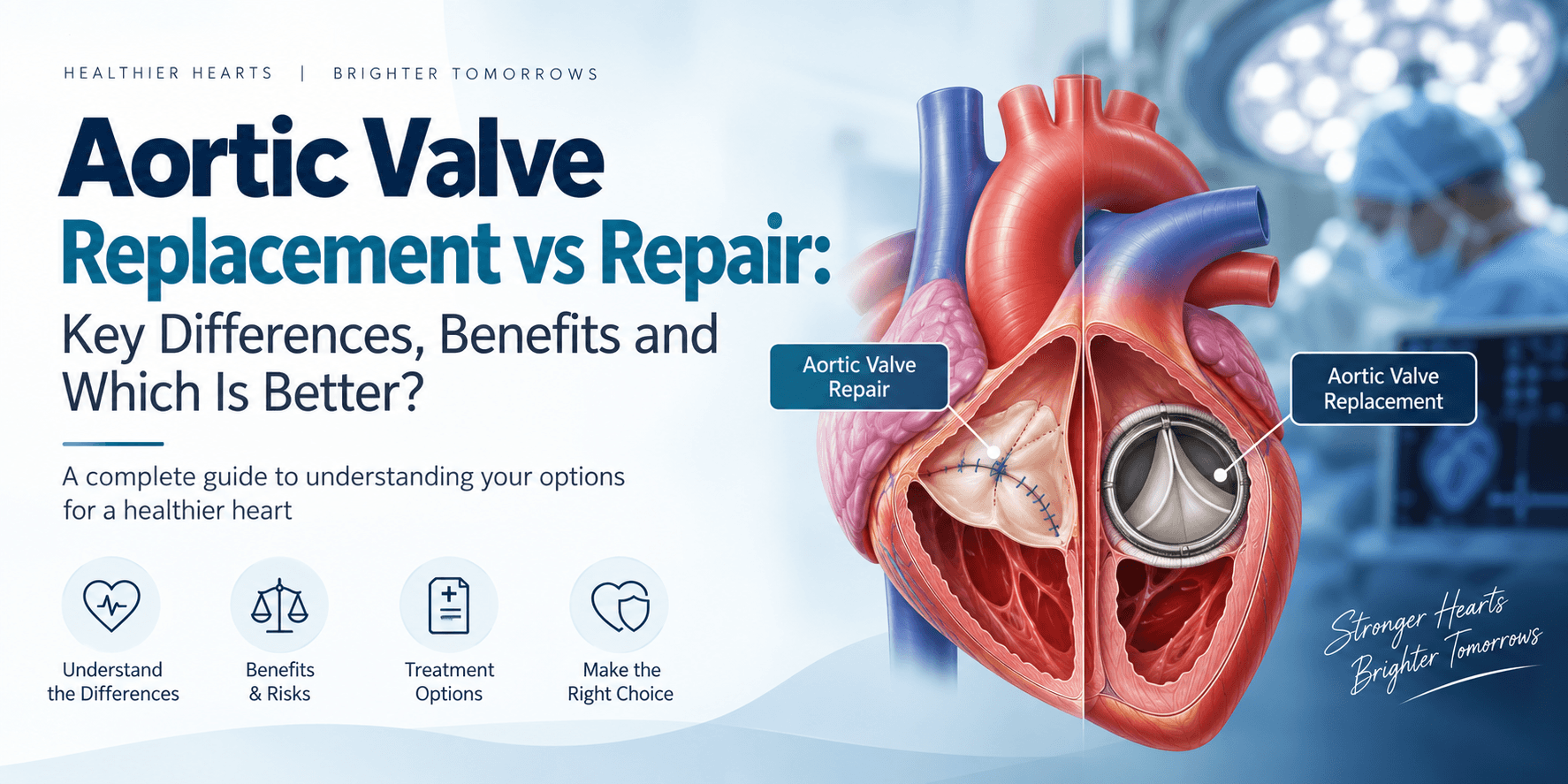
Aortic Valve Repair
In selected patients, the surgeon may be able to repair the patient’s own aortic valve rather than replace it. Valve repair can be considered when the valve anatomy is suitable and durable repair is expected.
Aortic Valve Replacement
When the valve cannot be repaired effectively, aortic valve replacement (AVR) may be recommended. The replacement valve can be:
- Mechanical
- Biological/tissue
The choice depends on factors such as age, lifestyle, medical conditions, expected durability and anticoagulation considerations.
What If Severe Aortic Regurgitation Is Caused by an Enlarged Aortic Root?
This is particularly important for patients with aortic root aneurysm and aortic regurgitation. If the aortic root is significantly enlarged, treatment may require surgery involving both the valve and aorta.
Possible procedures include:
Bentall Procedure
The Bentall procedure replaces the aortic root and aortic valve with a composite graft and prosthetic valve.
Valve-Sparing Aortic Root Replacement
In carefully selected patients, surgeons may replace the enlarged aortic root while preserving the patient’s own aortic valve. This is called valve-sparing aortic root replacement. Techniques such as the David procedure may be used in experienced centres.
Current European guidance recommends valve-sparing root replacement in selected younger patients with aortic root dilatation when durable results are expected.
Can Severe Aortic Regurgitation Be Treated Without Surgery?
Not every patient with severe aortic regurgitation needs immediate surgery. Doctors may monitor selected patients who:
- Have no symptoms
- Have preserved heart function
- Do not have significant left ventricular enlargement
- Do not have an aortic dimension requiring intervention
- Have an acceptable clinical profile for continued surveillance
Regular echocardiography and specialist follow-up are essential.
Medication may be used to manage associated conditions such as high blood pressure or heart failure, but medication does not physically repair a severely leaking aortic valve.
Acute vs Chronic Severe Aortic Regurgitation
This distinction is extremely important.
Chronic Severe Aortic Regurgitation
Chronic AR develops gradually. The heart has time to adapt, and some patients may remain without symptoms for years.
Treatment timing is usually based on:
- Symptoms
- LV function
- LV dimensions
- Aortic dimensions
- Rate of progression
Acute Severe Aortic Regurgitation
Acute AR develops suddenly. Possible causes include:
- Aortic dissection
- Infective endocarditis
- Chest trauma
- Certain complications of cardiac procedures
Acute severe AR can cause rapid deterioration and may require urgent surgery.
What Is the Recovery After Aortic Valve Surgery?
Recovery depends on the type of procedure, the patient’s health and whether additional surgery is required.
After open aortic valve surgery, patients generally spend time in intensive care followed by recovery in a hospital room.
Recovery may include:
- Heart monitoring
- Pain management
- Wound care
- Gradual physical activity
- Breathing exercises
- Cardiac rehabilitation
- Follow-up echocardiography
Complete recovery from major heart surgery can take several weeks. Your surgeon will provide individualized instructions about driving, exercise, lifting and returning to work.
What Are the Risks of Aortic Valve Surgery?
Aortic valve surgery is major cardiac surgery and can have risks. Potential complications include:
- Bleeding
- Infection
- Stroke
- Abnormal heart rhythm
- Blood clots
- Kidney complications
- Lung complications
- Heart attack
- Need for additional treatment
- Prosthetic valve complications, depending on the type of replacement
The actual risk varies significantly from one patient to another. Your surgical team should assess your individual risk before recommending surgery.
Severe Aortic Regurgitation: Surgery or Monitoring?
A simple way to understand the decision is:
| Patient situation | Typical approach |
|---|---|
| Mild AR, no symptoms | Monitoring |
| Moderate AR, stable heart function | Regular follow-up |
| Severe AR, no symptoms and preserved LV function | Close surveillance in selected patients |
| Severe AR with symptoms | Surgery usually recommended |
| Severe AR with LV dysfunction/enlargement | Surgery may be recommended |
| Severe AR with significant aortic enlargement | Aortic surgery may be required |
| Acute severe AR | Urgent specialist assessment and often emergency surgery |
This table is a simplified overview. The final treatment decision must be individualized.
Why Timing Matters in Severe Aortic Regurgitation
One of the biggest misconceptions about aortic valve disease is: “I don’t have symptoms, so I don’t need treatment.” That is not always true.
Severe aortic regurgitation can progressively enlarge the left ventricle before symptoms become obvious.
Modern management therefore focuses on identifying changes in:
- LVEF
- LVESD
- LV volume
- Aortic dimensions
- Symptoms
- Exercise capacity
before the heart develops advanced or potentially irreversible damage.
When Should You See an Aortic Valve Specialist?
You should consider specialist evaluation if you have been diagnosed with:
- Severe aortic regurgitation
- Aortic valve insufficiency
- Bicuspid aortic valve
- Aortic root enlargement
- Ascending aortic aneurysm
- Marfan syndrome or another inherited aortic condition
- Progressive breathlessness
- Reduced exercise capacity
- Unexplained chest discomfort
A specialist can review your echocardiogram and other imaging to determine the severity of the disease and whether continued monitoring or intervention is appropriate.
Aortic Valve Surgery in Chennai
If you have been diagnosed with severe aortic regurgitation in Chennai, evaluation by an experienced cardiac and aortic surgery team can help determine the appropriate treatment strategy.
The assessment may include:
- Detailed echocardiography
- CT or cardiac MRI when required
- Assessment of left ventricular function
- Evaluation of aortic root and ascending aorta
- Assessment of aortic valve anatomy
- Review of symptoms and exercise capacity
- Evaluation of associated conditions
For suitable patients, treatment may include aortic valve repair, aortic valve replacement, valve-sparing aortic root surgery or combined aortic and valve surgery.
The objective is not simply to perform surgery as early as possible — it is to determine the right treatment at the right time for the individual patient.
Frequently Asked Questions
- Is severe aortic regurgitation always treated with surgery?
- No. Some asymptomatic patients with preserved heart function and without significant ventricular or aortic enlargement may be monitored closely. Surgery is generally recommended when severe AR causes symptoms or reaches important heart-function or structural thresholds.
- What LVEF indicates surgery in severe aortic regurgitation?
- Guidelines differ slightly. The 2025 ESC/EACTS guideline recommends surgery in asymptomatic severe AR when LVEF is 50% or below, while ACC/AHA guidance uses 55% or below as a Class I indication for aortic valve replacement.
- Can severe aortic regurgitation cause heart failure?
- Yes. Chronic severe AR can progressively enlarge and weaken the left ventricle and eventually contribute to heart failure.
- Can aortic regurgitation be repaired instead of replaced?
- In selected patients, aortic valve repair can be performed when the valve anatomy is suitable and a durable repair is expected.
- What is the difference between aortic regurgitation and aortic stenosis?
- Aortic regurgitation occurs when the aortic valve leaks backward, while aortic stenosis occurs when the valve does not open adequately.
- Is severe aortic regurgitation dangerous?
- It can be serious, particularly when it causes symptoms, left ventricular dysfunction or significant enlargement of the aorta. Acute severe AR can be a medical emergency.
- Can severe AR be present without symptoms?
- Yes. Some patients remain asymptomatic despite severe valve leakage, which is why regular imaging and specialist follow-up are important.
Conclusion
Severe aortic regurgitation does not always mean immediate surgery — but it should never be ignored.
The decision to perform aortic valve surgery depends on the severity of the leak, symptoms, left ventricular function, ventricular size, aortic dimensions and the patient’s overall risk.
For patients with symptomatic severe AR, surgery is generally recommended when operative risk is acceptable. For patients without symptoms, careful monitoring of LVEF, LVESD, LV size and aortic enlargement helps doctors identify the right time for intervention.
Early specialist assessment can help determine whether the best approach is continued monitoring, aortic valve repair, aortic valve replacement, or combined aortic root and valve surgery.
If you have been diagnosed with severe aortic regurgitation, speak with an experienced cardiac/aortic surgeon to understand your treatment options and the appropriate timing of intervention.