
Heart Valve Replacement Surgery in Chennai | Advanced Valve Replacement by Dr. A. Mohammed Idhrees
Restoring normal blood flow through precise valve repair or replacement procedures.
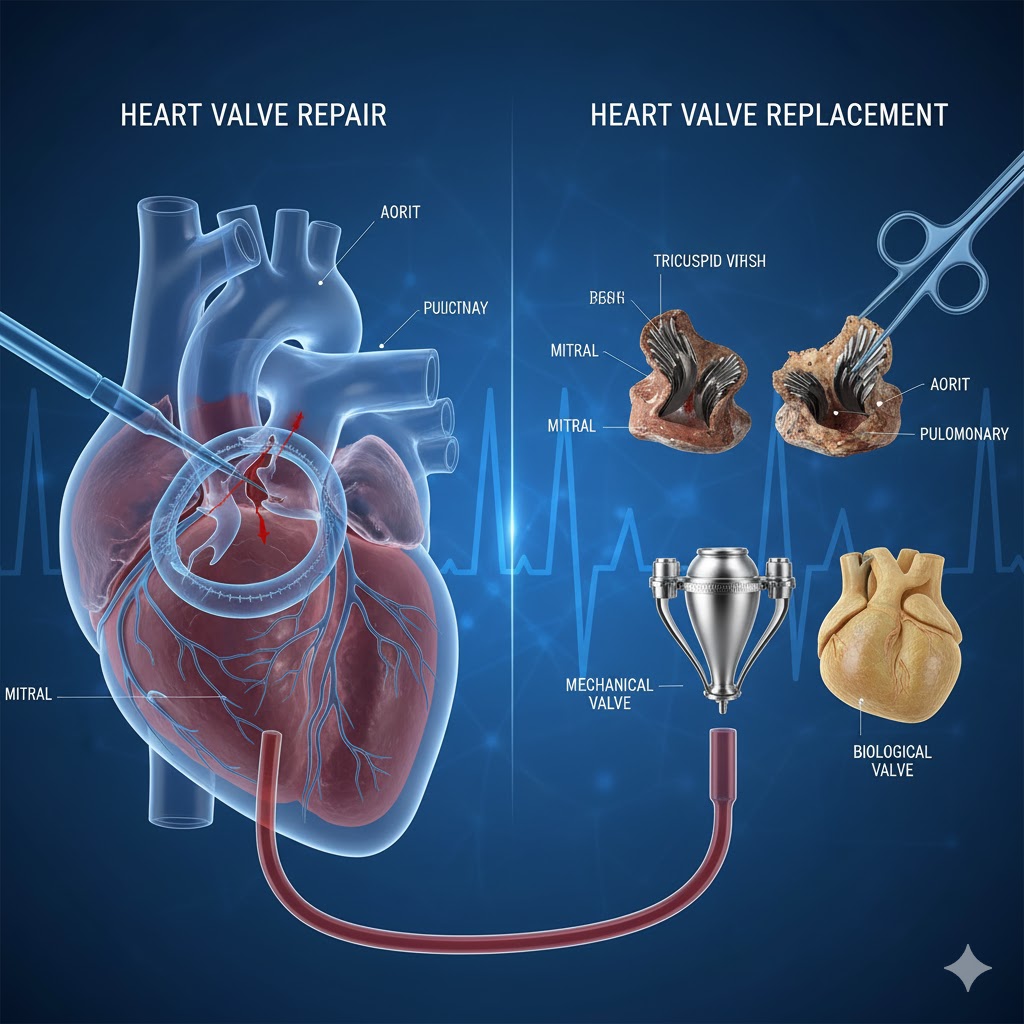
Heart Valve Repair & Replacement Surgery in Chennai
Heart valve replacement is a life-saving procedure performed when one or more of the heart valves become severely narrowed (stenosis) or leaky (regurgitation), preventing the heart from pumping blood efficiently. If left untreated, advanced valve disease can lead to heart failure, stroke, irregular heart rhythms, or other serious complications. At HeartNarota, Dr. A. Mohammed Idhrees, Senior Cardiovascular & Thoracic Surgeon with over 18 years of experience, provides advanced heart valve replacement surgery in Chennai using evidence-based surgical techniques, including Surgical Aortic Valve Replacement (SAVR), minimally invasive valve surgery, and transcatheter valve replacement (TAVR) where appropriate. Every treatment plan is tailored to the patient's condition, lifestyle, and long-term health goals.
What is Heart Valve Replacement?
Heart valve replacement is a surgical or catheter-based procedure that removes a damaged heart valve and replaces it with an artificial or biological valve. The new valve restores normal blood flow through the heart, reduces symptoms, and improves overall heart function. Valve replacement may be recommended when repair is not possible or when the valve has severe structural damage.
When Do You Need Heart Valve Replacement?
- Severe aortic stenosis
- Severe mitral regurgitation
- Tricuspid valve disease
- Pulmonary valve disease
- Congenital valve abnormalities
- Infective endocarditis affecting the valve
- Degenerative or calcified heart valves
Symptoms of Severe Heart Valve Disease
- Chest pain or tightness
- Shortness of breath
- Fatigue
- Dizziness or fainting
- Palpitations
- Swelling in the legs or ankles
- Reduced exercise tolerance
Types of Heart Valve Replacement
Aortic Valve Replacement (AVR)
- Treatment for severe narrowing or leakage of the aortic valve.
Mitral Valve Replacement (MVR)
- Recommended when the mitral valve cannot be repaired.
Tricuspid Valve Replacement
- Performed for severe tricuspid valve disease.
Pulmonary Valve Replacement
- Usually performed for congenital heart defects or severe pulmonary valve disease.
Types of Replacement Heart Valves
Biological (Tissue) Valves
- Made from specially treated animal or human tissue. They generally do not require lifelong blood-thinning medication but may need replacement after several years.
Mechanical Valves
- Constructed from durable materials such as carbon and metal. These valves are designed for long-term durability but require lifelong anticoagulation therapy to reduce the risk of blood clots.
Mechanical Valve vs Tissue Valve
Feature
- Durability Blood Thinners Suitable For Reoperation Risk
Mechanical Valve
- Excellent Lifelong Younger patients Lower
Tissue Valve
- 10–20 years Usually short-term Older patients Higher over time
Heart Valve Replacement Procedures
- Surgical Aortic Valve Replacement (SAVR)
- Transcatheter Aortic Valve Replacement (TAVR)
- Mitral Valve Replacement
- Minimally Invasive Valve Surgery
- Ross Procedure (when appropriate)
How is Heart Valve Replacement Performed?
- Comprehensive evaluation
- Imaging and diagnostic tests
- General anesthesia
- Surgical or catheter-based access
- Removal of the diseased valve
- Implantation of the new valve
- Confirmation of valve function
- Recovery in ICU
Benefits of Heart Valve Replacement
- Restores efficient blood flow
- Relieves symptoms
- Improves exercise capacity
- Reduces the risk of heart failure
- Improves long-term survival
- Enhances quality of life
Risks and Possible Complications
- Bleeding
- Infection
- Stroke
- Heart rhythm abnormalities
- Blood clots
- Kidney injury
- Valve-related complications
Recovery After Heart Valve Replacement
- ICU monitoring
- Hospital stay
- Pain management
- Walking and breathing exercises
- Wound care
- Cardiac rehabilitation
- Medication adherence
- Follow-up echocardiograms
- Return to work and normal activities
Why Choose Dr. A. Mohammed Idhrees?
- 18+ years of experience in cardiovascular and thoracic surgery
- Advanced Aortic Surgery Fellowship (Italy)
- International Valve Repair Fellowship (Belgium)
- Expertise in complex valve replacement and repair
- Personalized treatment plans
- Comprehensive pre- and post-operative care
- Associated with SIMS Hospital, Chennai
- Patient-focused, evidence-based care
Frequently Asked Questions
Recovery usually takes 4–6 weeks.
Repair fixes your valve replacement uses artificial valves.
Typically 3–6 hours.
Success rates are above 90% in experienced hands.
Yes, it offers faster recovery and less pain.