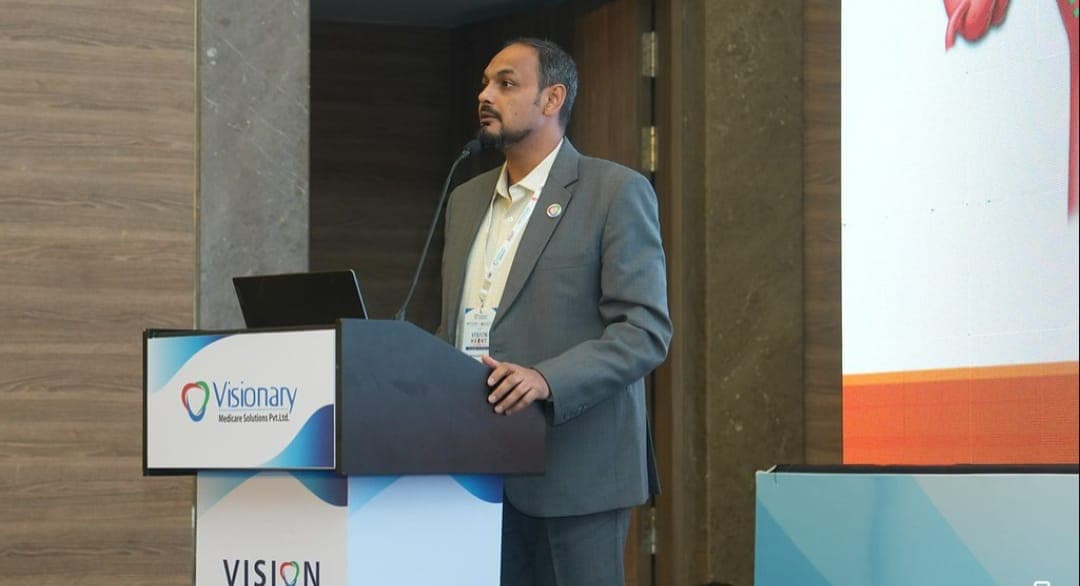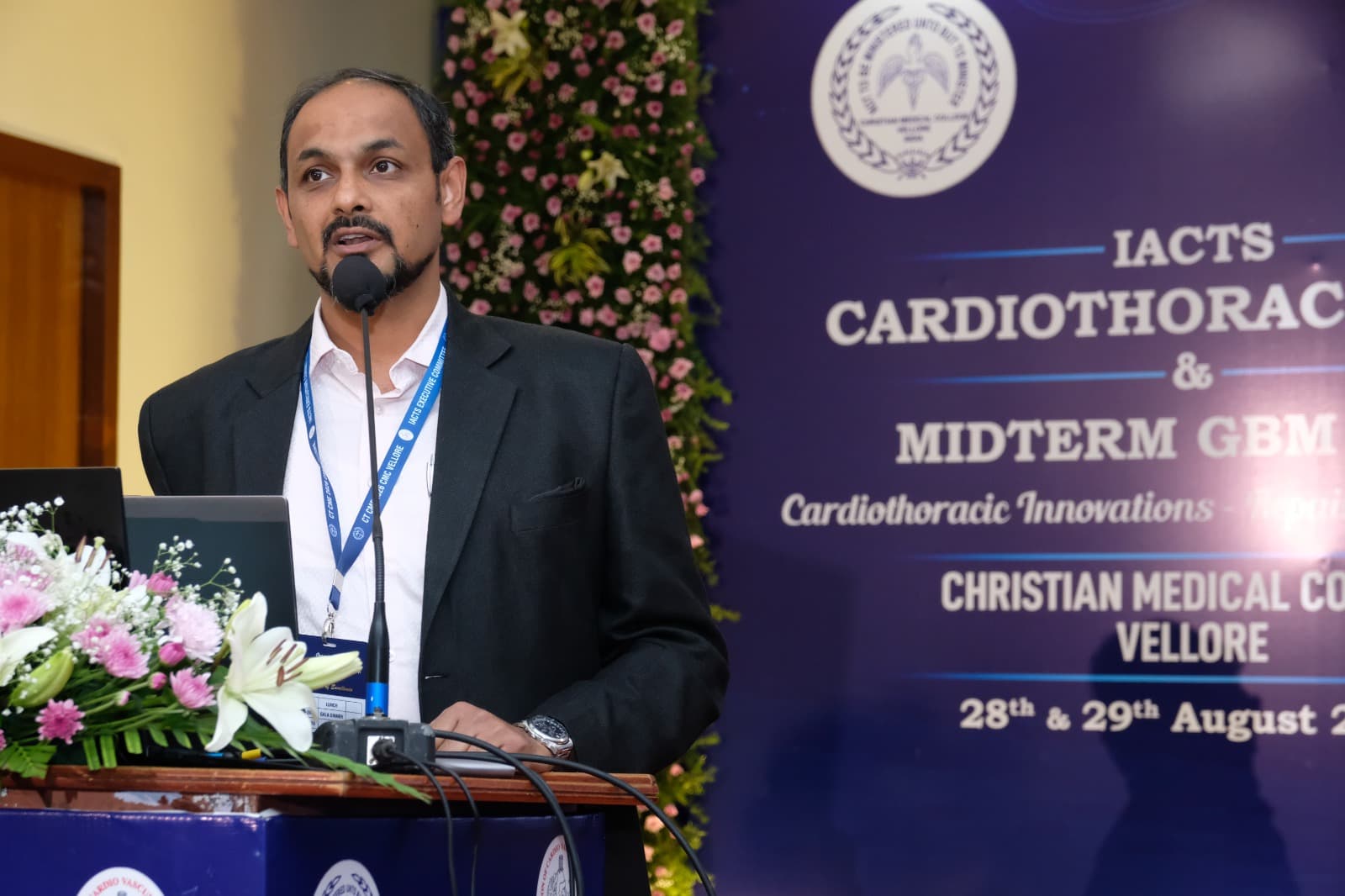
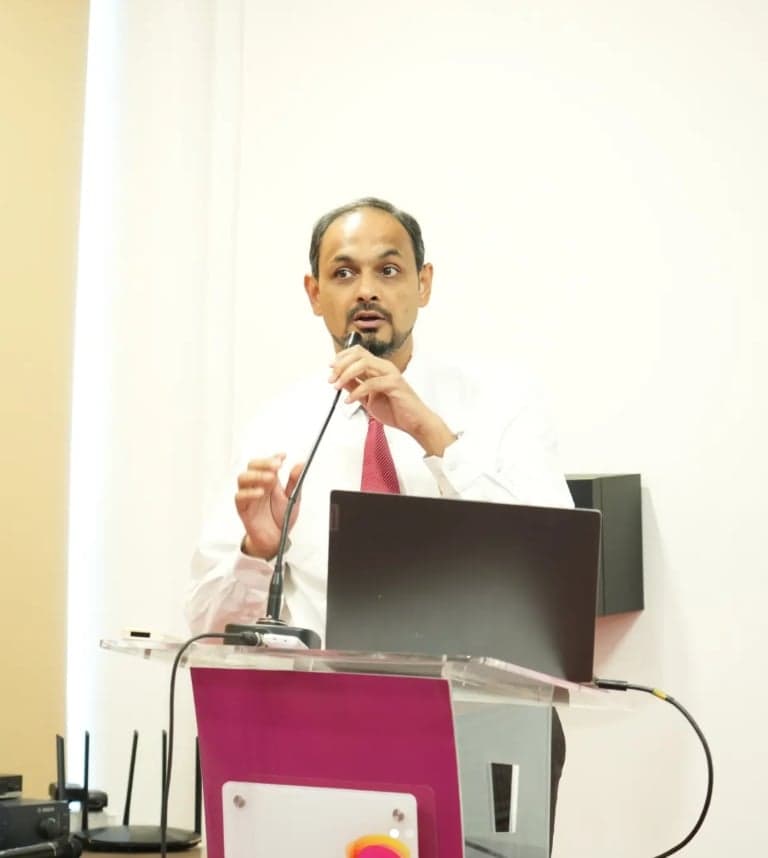

An Academic Talk at Peripheral Intervention, Kauvery Hospital, Vadapalani, Chennai | 31 October 2026
Advancing Aortic Arch Surgery Through Academic Learning and Knowledge Sharing
I was honoured to be invited as faculty for the Peripheral Intervention academic programme organised by Kauvery Hospital, Vadapalani, Chennai, on 31 October 2026.
The programme provided a valuable opportunity for medical professionals to come together, exchange clinical knowledge, discuss evolving treatment approaches, and explore advancements in contemporary cardiovascular care.
As part of this academic event, I had the opportunity to deliver a talk on Frozen Elephant Trunk (FET), an important surgical technique in the field of contemporary aortic arch surgery.
The session offered an opportunity to share insights into this advanced surgical approach and its significance in the management of selected complex aortic conditions.
I am grateful to the organisers at Kauvery Hospital for the invitation and for creating a platform that encourages academic engagement, professional collaboration, and continuous medical education.
Understanding the Frozen Elephant Trunk (FET) Technique
The aorta is the largest artery in the human body and plays a fundamental role in supplying oxygenated blood to the systemic circulation. The aortic arch and descending thoracic aorta are particularly important anatomical regions because of their relationship with major branches supplying the brain and upper body.
Diseases affecting these regions can present significant challenges in cardiovascular and aortic surgery. Complex aortic aneurysms, aortic dissections, and other pathologies involving multiple segments of the thoracic aorta may require carefully planned surgical strategies.
The Frozen Elephant Trunk (FET) technique is an advanced surgical approach developed to address selected conditions involving the aortic arch and descending thoracic aorta.
It combines conventional surgical reconstruction of the aortic arch with an integrated stent-graft component that extends into the descending thoracic aorta.
This combined approach enables the surgeon to address disease involving both the arch and a portion of the descending aorta during a single operative procedure in appropriately selected patients.
The development and refinement of the FET technique represent an important milestone in the evolution of complex aortic surgery.
What Makes the Frozen Elephant Trunk Technique Important?
Traditionally, extensive disease involving the aortic arch and descending thoracic aorta could require complex staged surgical approaches.
The Frozen Elephant Trunk technique offers an alternative strategy in selected patients by combining arch reconstruction and endovascular treatment of the descending thoracic aorta within one operation.
Its significance lies in several important aspects of contemporary aortic surgical practice.
1. Addressing Complex Aortic Arch Pathology
The aortic arch is a technically demanding region for surgical reconstruction because of its anatomical complexity and the presence of major arterial branches supplying the brain and upper extremities.
Pathologies affecting the arch may extend into the descending thoracic aorta, making surgical planning particularly challenging.
The FET technique provides a comprehensive surgical strategy for selected patients whose disease involves these adjoining aortic segments.
2. Combining Surgical Reconstruction With Endovascular Technology
One of the defining characteristics of the Frozen Elephant Trunk procedure is its hybrid nature.
The technique integrates open surgical reconstruction of the aortic arch with the deployment of a stent-graft into the descending thoracic aorta.
This combination represents the convergence of conventional cardiovascular surgery and modern endovascular technology.
The resulting reconstruction can establish a new pathway for blood flow while addressing diseased segments of the aorta.
3. Supporting Aortic Remodeling in Selected Conditions
In appropriately selected patients with aortic dissection, the stented component of the FET graft may help promote favourable aortic remodeling.
By expanding the true lumen and supporting exclusion of the diseased segment, the procedure may contribute to improved aortic configuration in suitable clinical circumstances.
However, the extent of remodeling and long-term outcomes depend on the underlying pathology, patient characteristics, surgical technique, and postoperative course.
4. Creating a Potential Platform for Further Treatment
The distal stented portion of the FET graft can also provide a useful landing zone for subsequent endovascular interventions when required.
This is particularly relevant in selected patients with extensive thoracic aortic disease who may require additional treatment during follow-up.
The possibility of staged or subsequent interventions is an important consideration when planning treatment for complex aortic pathology.
Clinical Applications of Frozen Elephant Trunk Surgery
The Frozen Elephant Trunk technique has an important role in the management of selected patients with complex thoracic aortic conditions.
The decision to use this technique depends on a detailed assessment of the patient’s anatomy, the extent of aortic disease, associated clinical factors, and the overall surgical strategy.
Aortic Arch Aneurysms
Aortic arch aneurysms involve abnormal dilatation of the aortic arch and may extend into the descending thoracic aorta.
When an aneurysm affects multiple aortic segments, conventional surgical reconstruction alone may not adequately address the entire extent of the disease.
In selected patients, the FET technique provides an approach to reconstruct the aortic arch while simultaneously treating the adjoining descending thoracic aortic segment.
Acute and Chronic Aortic Dissection
Aortic dissection is a serious condition in which blood enters the layers of the aortic wall, creating a false lumen.
Dissections involving the ascending aorta and aortic arch require careful surgical assessment and, in appropriate cases, urgent intervention.
The Frozen Elephant Trunk technique may be considered in selected patients with complex aortic dissection involving the arch and descending thoracic aorta.
The treatment strategy is determined by the extent of dissection, anatomical considerations, clinical presentation, and the patient’s overall condition.
Complex Thoracic Aortic Disease
Certain patients present with extensive aortic pathology involving multiple segments of the thoracic aorta.
Managing these conditions requires careful consideration of the surgical approach, the extent of reconstruction, and the potential need for additional treatment.
The FET technique provides an important option within the broader range of contemporary surgical and endovascular strategies used to treat complex aortic disease.
Surgical Planning and Technical Considerations in FET
Although the Frozen Elephant Trunk technique offers important advantages in selected clinical situations, it remains a complex cardiovascular surgical procedure that requires meticulous planning and execution.
Several considerations are central to the safe and effective application of this technique.
Detailed Preoperative Imaging
Preoperative imaging plays a critical role in evaluating aortic pathology and planning the surgical procedure.
Computed tomography angiography is commonly used to assess:
- The extent and distribution of aortic disease
- The dimensions of the aortic arch and descending thoracic aorta
- The relationship between the pathology and major aortic branches
- The presence of true and false lumens in aortic dissection
- Potential anatomical challenges during graft deployment
- The suitability of the aorta for the planned reconstruction
A comprehensive understanding of the patient’s aortic anatomy is essential for selecting the appropriate surgical strategy.
Cerebral Protection During Aortic Arch Reconstruction
The aortic arch gives rise to major arteries supplying the brain. Consequently, cerebral protection is a fundamental consideration during aortic arch surgery.
Depending on the procedure and institutional practice, cerebral protection strategies may include selective antegrade cerebral perfusion, temperature management, and carefully planned circulatory support.
The choice of strategy is influenced by the patient’s anatomy, the extent of reconstruction, and the surgical team’s approach.
Graft Selection and Deployment
The selection of an appropriate Frozen Elephant Trunk graft requires careful consideration of the aortic dimensions and the underlying pathology.
Accurate graft sizing and deployment are important to achieving an effective reconstruction while minimising the risk of complications.
The surgeon must also consider the position of the distal stented component and its relationship to the surrounding aortic anatomy.
Distal Aortic Management
The distal extent of the disease is an important determinant of the overall surgical strategy.
In patients with extensive aortic pathology, the reconstruction must be planned with consideration for the possibility of residual disease or future aortic enlargement.
This is particularly relevant when determining whether additional treatment may be required during long-term follow-up.
The Importance of Multidisciplinary Collaboration in Aortic Surgery
The management of complex aortic disease often involves collaboration among multiple medical specialties.
Cardiovascular surgeons, vascular surgeons, cardiologists, radiologists, anaesthesiologists, and critical care specialists may contribute to different aspects of patient evaluation, treatment planning, operative management, and postoperative care.
The integration of surgical expertise with advanced imaging and endovascular technology is increasingly important in contemporary aortic practice.
Academic programmes that encourage interaction between medical professionals from different specialties help strengthen this collaborative approach.
They also provide an opportunity to discuss challenging clinical scenarios, evaluate evolving techniques, and share experiences that can contribute to the advancement of patient care.
Academic Talk on Frozen Elephant Trunk at Kauvery Hospital, Vadapalani
Participating as faculty at the Peripheral Intervention programme organised by Kauvery Hospital, Vadapalani, was a valuable academic experience.
My talk on the Frozen Elephant Trunk technique provided an opportunity to share insights into an important area of contemporary aortic arch surgery.
Academic discussions surrounding advanced aortic procedures are essential because the field continues to evolve through improvements in surgical techniques, graft technology, imaging, and multidisciplinary treatment strategies.
Such interactions also encourage meaningful professional engagement and create opportunities for continued learning among medical professionals.
I sincerely thank the organisers at Kauvery Hospital for inviting me to be part of this academic programme and for providing a platform to share knowledge and experience.
Continuous Medical Education and the Future of Aortic Surgery
The field of cardiovascular and aortic surgery continues to advance through innovation, clinical experience, and ongoing academic collaboration.
Techniques such as the Frozen Elephant Trunk procedure demonstrate how the integration of surgical and endovascular technologies can expand the range of treatment options available for selected patients with complex aortic disease.
However, the success of any advanced surgical technique depends on appropriate patient selection, careful preoperative planning, sound surgical judgment, and comprehensive postoperative care.
Continuous medical education and professional knowledge sharing remain essential in ensuring that evolving surgical approaches are understood, evaluated, and applied appropriately.
Academic events provide an important opportunity to contribute to this ongoing process.
Looking Ahead
I am grateful for the opportunity to have participated as faculty at the Peripheral Intervention academic programme at Kauvery Hospital, Vadapalani, Chennai.
Sharing insights on the Frozen Elephant Trunk technique was a meaningful experience and reinforced the importance of continuous learning and collaboration in advancing contemporary aortic surgery.
I look forward to participating in more academic programmes, professional interactions, and educational initiatives that contribute to the development of cardiovascular and aortic surgical practice.
Thank you to the organisers and fellow medical professionals for making this a valuable academic experience.
Frequently Asked Questions About Frozen Elephant Trunk (FET)
- What is the Frozen Elephant Trunk (FET) technique?
- The Frozen Elephant Trunk technique is an advanced aortic surgical procedure that combines open reconstruction of the aortic arch with an integrated stent-graft extending into the descending thoracic aorta.
- What conditions can be treated using the Frozen Elephant Trunk procedure?
- The technique may be used in selected patients with complex aortic arch aneurysms, aortic dissection, and other conditions involving the aortic arch and descending thoracic aorta.
- What is the significance of the Frozen Elephant Trunk technique in aortic arch surgery?
- The technique allows the surgeon to address selected pathologies involving the aortic arch and descending thoracic aorta during a single operation, while potentially providing a platform for future endovascular treatment when required.
- Is the Frozen Elephant Trunk procedure suitable for every patient with aortic disease?
- No. The procedure is considered for selected patients based on the extent of aortic pathology, anatomical suitability, clinical condition, and the overall treatment strategy.
- Why are academic discussions on advanced aortic surgery important?
- Academic discussions support continuous medical education, knowledge sharing, multidisciplinary collaboration, and the evaluation of evolving surgical techniques that contribute to the advancement of cardiovascular care.
About the Academic Event
- Event: Peripheral Intervention
- Organiser: Kauvery Hospital, Vadapalani
- Location: Chennai, Tamil Nadu, India
- Date: 31 October 2026
- Academic Topic: Frozen Elephant Trunk (FET) – Contemporary Aortic Arch Surgery
- Participation: Faculty